

This week, Dr. Bob Fitrakis and Dan-o Dougan talk about climate change, the increase in wind in Ohio, how Trump is trying to stop windmills, and play lots of songs about wind.
Listen live at 11pm Friday, April 4 and 11 streaming at wgrn.org or on the radio at 91.9FM
and
Monday at 2pm streaming April 7 and 14 at wcrsfm.org or on the radio at 92.7 or 98.3FM

The phrase "civil war" is one of the most dominant terms used by Israeli politicians today. What began as a mere warning from Israeli President Isaac Herzog is now an accepted possibility for much of Israel's mainstream political society.
“(Israeli Prime Minister Benjamin) Netanyahu is ready to sacrifice everything for his survival, and we are closer to a civil war than people realize,” former Israeli Prime Minister Ehud Olmert stated in an interview with The New York Times on March 24.
The assumption is that the feared civil war reflects the political polarization in Israel: two groups divided by strong views on war, the role of government, the judiciary, budget allocations, and other issues.
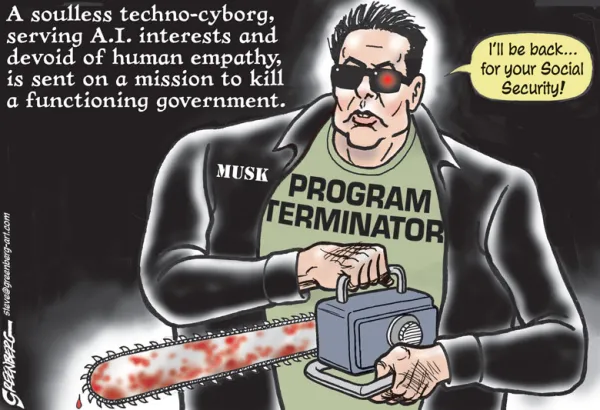
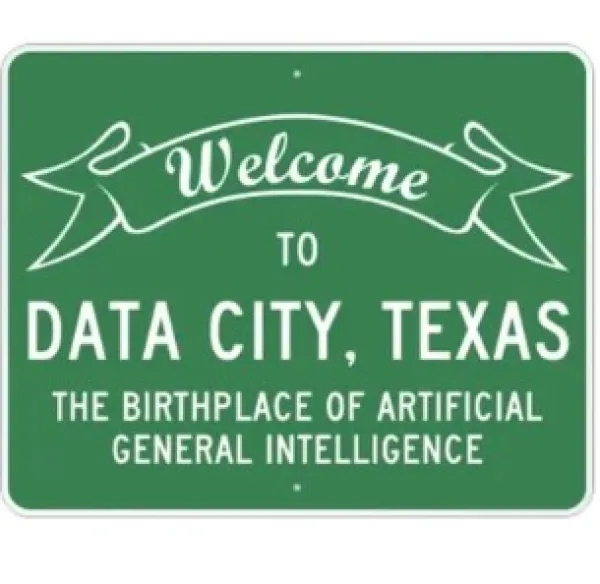
AI and the Energy Sector
A onprofit electricity research and development organization, EPRI, https://www.epri.com/, announced a collaboration with Microsoft to develop and deploy AI solutions for the energy sector.
The OpenPower AI consortium will collaborate with energy companies globally in an effort to enhance grid reliability, improve workforce safety, advance forecasting and planning models and achieve real-time grid intelligence by using artificial intelligence. EPRI announced the launch of the OpenPower AI consortium at Nividia's GTC conference https://msites.epri.com/opai last month, stating that the effort hopes to drive the development and deployment of an OpenAI model tailored to the power sector.
The consortium will focus on three primary areas.
The first is to develop and maintain open-source AI models, data sets, libraries, as well as optimizing power sector specific challenges.
The Environmental Protection Agency (epa.gov) ) website includes a short history
of the agency. Here’s some of what you can find there
(https://epa.gov/history/origins-epa).
“The American conversation about protecting the environment began in the 1960s.
Rachel Carson had published her attack on the indiscriminate use of
pesticides, Silent Spring, in 1962. Concern about air and water pollution had
spread in the wake of disasters. An offshore oil rig in California fouled beaches
with millions of gallons of spilled oil. Near Cleveland, Ohio, the Cuyahoga River,
choking with chemical contaminants, had spontaneously burst into flames.
Astronauts had begun photographing the Earth from space, heightening awareness
that the Earth’s resources are finite.
“In early 1970, as a result of heightened public concerns about deteriorating city
air, natural areas littered with debris, and urban water supplies contaminated with
dangerous impurities, President Richard Nixon presented the House and Senate a
groundbreaking 37-point message on the environment. These points included: