
Opinion

Rogue Machine’s West Coast premiere of award winning British playwright Mike Bartlett’s Earthquakes in London is, according to Rogue’s artistic director and the drama’s co-director John Perrin Flynn, “quite simply, the best play I have read about global warming.” This three hour-ish, UK-set tour-de-force takes a deep dive into the pressing subject of climate - as well as family - crisis. It is an epic play that goes back and forth in time and is mainly for more daring theatergoers and environmentalists who take their drama and politics seriously.
With the caveat that said ticket buyers have slept well the night before and hence can be very alert and pay close attention to the complex characters and storylines that shift on theatrical tectonic plates. For example, the pivotal role of the climate scientist father, Robert, is played by Paul Stanko as a young man and then in his maturity by Ron Bottitta. Robert is being wooed by energy companies, so we see him
before and after - but this might confuse some viewers.
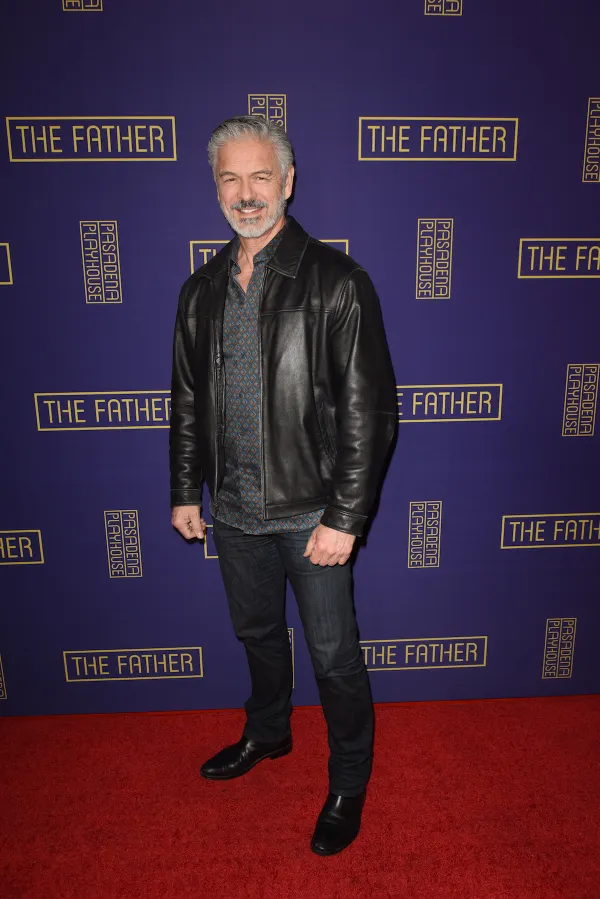
Alfred Molina renders a devastating depiction of dementia in Florian Zeller’s award winning The Father. Ably directed by Jessica Kubzansky, this one-act Alzheimer-palooza is staged in what is usually described as a “cinematic” way, with intercutting and perhaps even montage used to indicate Andre’s (Molina) increasingly fragmented, confused perception of reality. The lighting and sound designers, respectively Elizabeth Harper and John Zalewski, adroitly enhance the loss of his bearings, with David Meyer’s shape shifting sets adding to Andre’s sense of mental mayhem.
At one point race is effectively used for shock value - not in a cultural, ethnic sense but in a visual way that jolts the senses. Andre is also always looking for his watch, which he accuses caregivers (as a convenient ruse to sack them, so he can maintain his ephemeral sense of independence) and others of stealing. But in contrast to, say, Rolexes, Andre’s watches are more akin to Salvador Dali’s melting timepieces, symbolizing the distortion of the passage of time.

Recently, I was shadowing some of our organizing committee members when they hit the doors in the Mountjoy-Dorset neighborhood of Dublin as they ventured forward to build the first community organization in ACORN’s newest affiliate in Ireland. In the first ten doors we hit, two of them claimed that they had been door knocked the previous weekend. That was awkward. One was clearly engaged, but the other was as clearly, brushing us off as she ran out the door. All of this underlined the simple lesson that as hard as it is to organize a community, we need to do everything we can to make it easier on the people doing the work. Stressing the importance of clear lists and, as critically, counting all the doors that are knocked, not just the ones that were home, is a fundamental.
<<SNIP>>
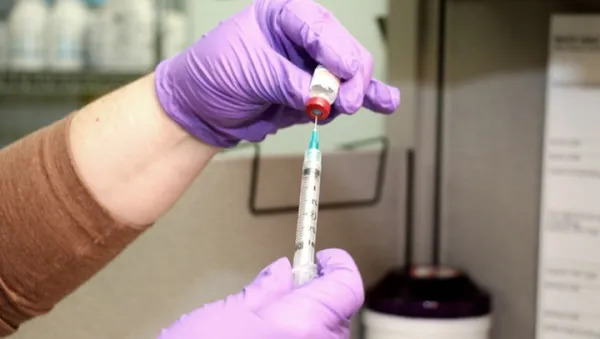
The Number Needed to Vaccinate (NNV)the number of patients will need to be vaccinated for one patient to benefit. The larger the number, the worse the efficacy of the vaccine (or drug). A few examples are listed below:
Examples of Important Numbers Needed to Vaccinate (NNV)
Autoimmune disorders are an important and under-appreciated issue that desperately needs the attention of every autoimmune disorder awareness group and autoimmune disorder support group, especially in the case of Type 1, insulin-dependent diabetes mellitus (T1D), an established autoimmune disorder whose treatment teams and T1D patients themselves are often unaware of or are in denial.
What medical teams - and their autoimmune disordered patients - often aren’t aware of is the fact that most autoimmune disorders are caused by commonly-injected aluminum-adjuvanted vaccines.
There is a large variety of autoimmune disorders (see partial list further below) and many of them begin months or years after the heavy early vaccination years when so many cocktails of vaccines are injected into the muscles of babies and young children. Many autoimmune disorders only manifest themselves when a final vaccination tips the patient’s immune system over into its clinical manifestation.
Autoantibodies

The mainstream media imposes some serious certainties on the 2020 presidential election that drive me into a furious despair, e.g.:
Even though Bernie Sanders, winner of the first two Democratic primaries, is now leading in the national polls, he “can’t and won’t” be the party’s nominee “because in coming weeks,” writes Liz Peek in The Hill, “Democrats will make sure that Socialist Bernie does not get the nomination. More will realize that he will lead the party to a calamitous loss, and they will look for an alternative. Overwhelmed by ads, underwhelmed by others in the race, they will come to realize that Mike Bloomberg is the best they’ve got.”
Hey progressives, America is not a socialist country! Get it?

“26,000 people have to be injected with the pneumococcal vaccine in order to prevent a single case of invasive pneumococcal disease!”
“Of the 21,536 reported cases of pneumococcal-vaccine-related adverse events (reported to VAERS as of May 31, 2019), 2,306 were deaths, with nearly 70 percent occurring in children under 6 years of age.”
I recently did some deep research concerning the recent findings of the CDC’s (US Center for Disease Control and Prevention) Advisory Committee on Immunization Practices (ACIP) regarding its 2019 conclusion concerning the total lack of efficacy of the two block-buster, multi-billion dollar pneumococcal vaccines, Prevnar-13 (Pfizer) and Pneumovax-23 (Merck).
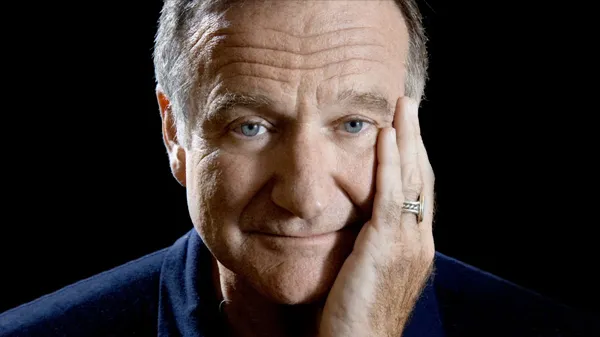
55 years ago (July 2, 1961) an American literary icon, Ernest Hemingway, committed suicide at his beloved vacation retreat in Ketchum, Idaho. He had just flown to Ketchum after being discharged from a psychiatric ward at the Mayo Clinic in Rochester, MN where he had received a series of electroconvulsive “treatments” (ECT) for a life-long depression that had started after he had experienced the horrors of World War I. In the “War To End All Wars” he had been a non-combatant ambulance driver and stretcher-bearer.
One of Hemingway’s wartime duties was to retrieve the mutilated bodies of living and dead humans and the body parts of the dead ones from the Italian sector of the WWI battle zone. In more modern times his MOS (military occupational specialty)might have been called Grave’s Registration, a job that - in the Vietnam War - had one of the highest incidences of posttraumatic stress disorder (PTSD) that arose in that war’s aftermath.
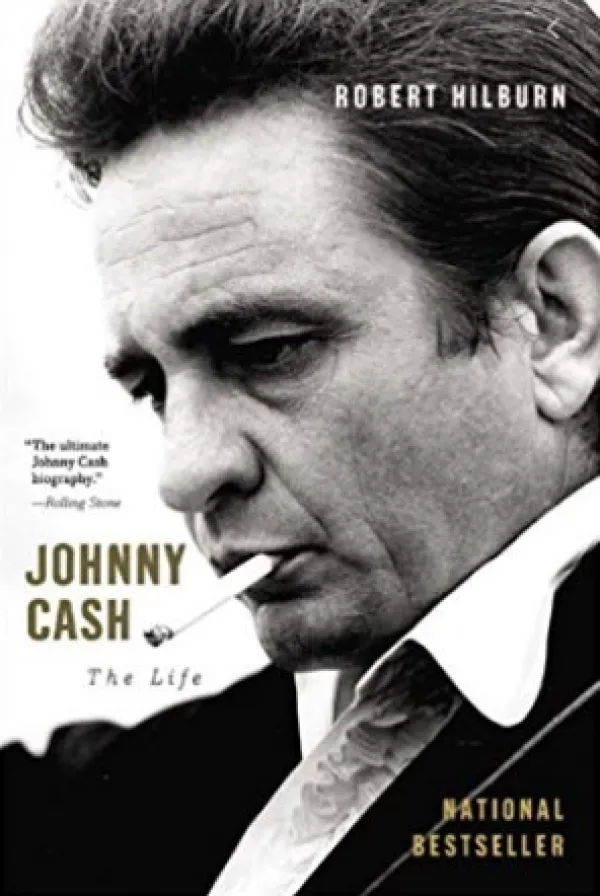
February means Valentine's Day and Valentines mean love therefore this column is just brimming with the stuff.
My first shout-out: Johnny Cash.
I've been reading Robert Hilburn's excellent bio on the Man In Black, Johnny Cash – The Life, and I must say I am struck by two things.
One, how hard 1930s Great Depression life was in rural Arkansas. Cash's family was completely the Tom Joad experience but without the Okie western exodus. Cash's farmer father was past desperation, his family virtually destitute when FDR's administration came to the rescue with 20-acre plots for farmers willing to pay them back.
Cash wasn't expected to pick cotton ‘til he was six. But by four he was hauling water out to his family as they did. There they joined together in singing gospel songs. Indeed, by the age of three he already had mastered his first, I Am Bound for the Promised Land.
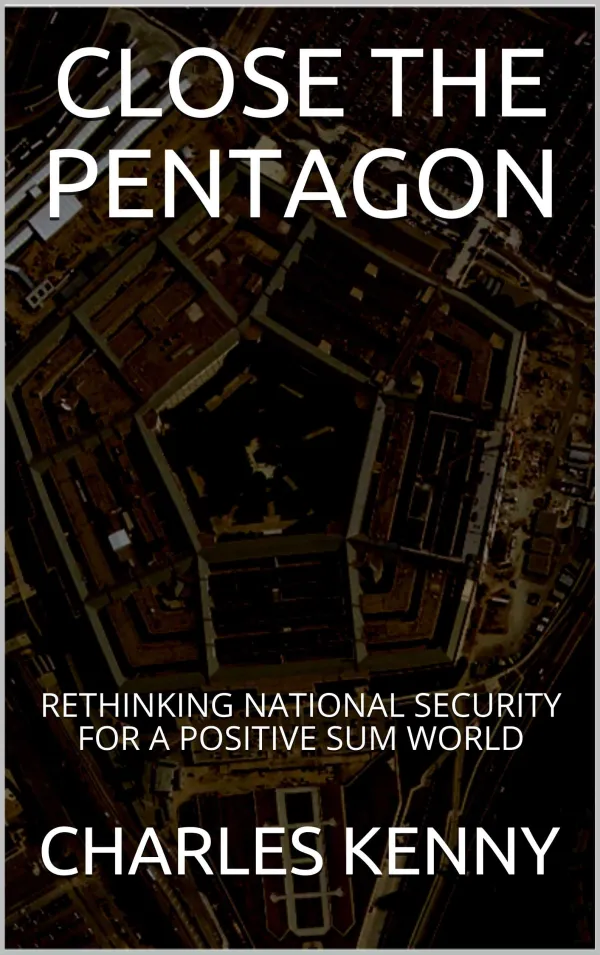
Charles Kenny’s book, Close the Pentagon, has an endorsement from Steven Pinker despite wanting to close something that Pinker rarely acknowledges exists.
This is a book to answer the question: What if someone who believed that war was only committed by poor, dark, distant people, and had therefore almost vanished from the earth, were to encounter the U.S. military and the U.S. military budget?
The answer is basically a proposal to move the money from militarism to human and environmental needs — and who doesn’t want to do that?
And if people who think war is almost gone and disappearing on its own can nonetheless be motivated to help end war-making by what they consider a bit player and what Dr. King correctly labeled the greatest purveyor of violence on earth, so much the better!
But a strategy to make it happen is going to need to be in greater contact with the real world than is a book that contains words like these: “If the U.S. wants to reduce the number of civil wars and their resulting spillovers . . . .”