
Opinion
The Global War on Terror or GWOT was declared in the wake of 9/11 by President George W. Bush. It basically committed the United States to work to eliminate all “terrorist” groups worldwide, whether or not the countries being targeted agreed that they were beset by terrorists and whether or not they welcomed U.S. “help.” The GWOT was promoted with brain-dead expressions like “there’s a new sheriff in town” which, after the destruction of large parts of the Middle East and Central Asia, later morphed into the matrix of the God-awful belief that something called “American Exceptionalism” existed.

On May 15, thousands of Palestinians in Occupied Palestine and throughout the ‘shatat’, or diaspora, participated in the commemoration of Nakba Day, the one event that unites all Palestinians, regardless of their political differences or backgrounds.
For years, social media has added a whole new stratum to this process of commemoration. #Nakba72, along with #NakbaDay and #Nakba, have all trended on Twitter for days. Facebook was inundated with countless stories, videos, images, and statements, written by Palestinians, or in global support of the Palestinian people.

“Guns aren’t just a danger in and of themselves,” writes Noah Berlatsky at Quartz. “They enable a policing philosophy built on violence and forced compliance, rather than one founded on respect, trust and consent. That philosophy affects every police interaction, even those that don’t involve actual shooting.”
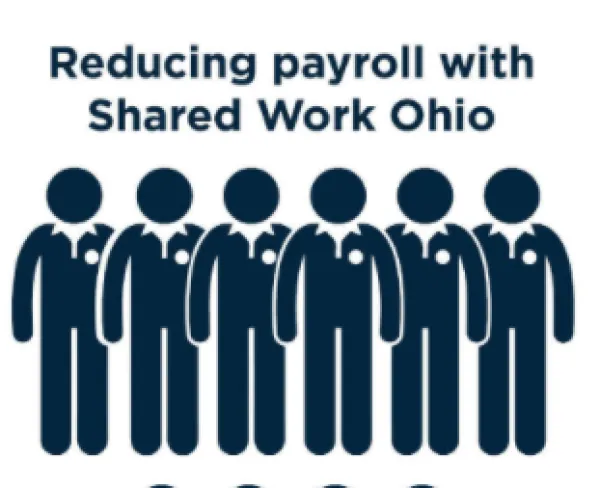
A growing number of Ohio employers have discovered a tool to scale back operations while avoiding layoffs: Worksharing. Ohio’s shared work program allows employers to reduce employee hours by up to half. Workers then receive unemployment compensation proportionate to the hours they don’t work. Employees keep their jobs and benefits, employers avoid hiring and training new workers when demand recovers.
The Ohio Department of Job & Family Services (ODJFS) said May 7 that some 511 Ohio employers are participating, covering 24,247 employees. Altogether, ODJFS has approved 827 plans, up from just 67 on March 15. Another 95 plans covering 2,819 employees are pending. An employer may have more than one plan, and cut hours by different amounts in different operations.
“This mini-explosion demonstrates that shared work could be a valuable tool for employers of all kinds,” said Zach Schiller, Policy Matters Ohio research director. “Moreover, it can also be used by employers to bring workers back to work.”
City Council this week approved of two new Community Reinvestment Areas or CRAs, one for Grandview Crossing and one for Northland. They also extended the boundaries of the Linden CRA. These CRAs now make developers eligible for a 15-year 100% property tax abatement.
Furthermore, City Council approved a $6.7 million tax abatement for Kaufman Development’s Gravity Project 2 in Franklinton.
I do not have an issue with the creation of the Northland CRA and extending the boundaries of the Linden CRA as long as tax incentives are used primarily to benefit true affordable housing for low-to-middle income residents, and keeps gentrification in check.
But at a time when people are struggling to survive, the Mayor and City Council must be out of their minds for approving the Grandview Crossing CRA and the Kaufman Gravity 2 abatement.
Gov. Dewine, Lt. Gov. Husted, and Dr. Acton,
First off I want to thank you for your diligent work to keep myself and the rest of the state of Ohio safe during these unprecedented and strange times. When historians look back on this period in American history, all three of you—and the many people on the ground working for your administration—will be fondly remembered for your compassionate, logical, and careful work. I am particularly impressed by Dr. Acton’s ability to not only speak truth to power, but to explain complex, scientific ideas and data to a general audience. As someone who has spent a lot of time in higher education, both at the undergrad and grad levels, I am infinitely impressed by this trait. Your press conferences have brought confidence, truthfulness, and science to the forefront of the conversation on how Ohio can overcome this frightening enemy.

The U.S. government is certainly in the running for worst handling of coronavirus on earth. Where did this grotesque incompetence and indifference to human lives come from so suddenly?
What if it was always there?
What if it’s to be found in long-standing U.S. policies on environment, energy, labor, healthcare, education, and retirement?
What if U.S. policy on climate collapse is just as catastrophic as on coronavirus, but the clown car simply hasn’t yet reached the edge of the cliff it’s been barreling toward?
What if the scientists who are screaming that the Doomsday Clock is nearer midnight than ever before, that the earth is more likely than ever to experience nuclear apocalypse, don’t view U.S. nuclear policy as somehow wiser than U.S. coronavirus policy? What if we’re still here at all principally because of outrageously great luck that cannot possibly hold out much longer?
We don’t know what the long-term damage is of coronavirus in those who recover. We don’t know who will die among those who catch it. We do know that we each have a responsibility to avoid catching it and avoid spreading it. Here are some ways to do that.
1) If you can’t relocate to a well-run country, do get booked for a meeting with Donald Trump or Mike Pence, so that you qualify to be tested; but don’t actually go to such a meeting because,
a) The White House is a hotbed.
b) The reckless attendees won’t be careful.
c) You’d be meeting with Donald Trump or Mike Pence.
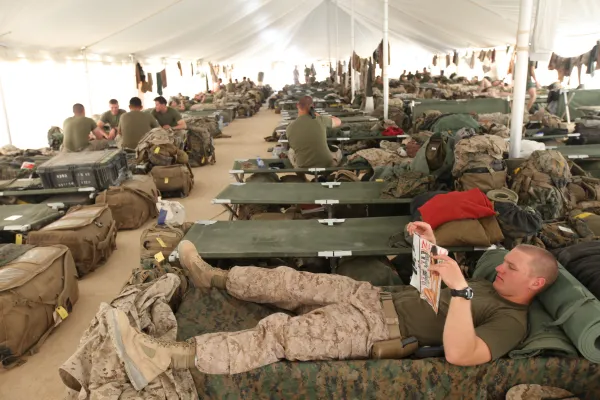
2) Do not go to jail. Avoid it at all costs. The place is likely to be a hotbed with cramped quarters and non-existent basic rights — almost like an aircraft carrier (and I do mean carrier) or a military base, only with nicer guards.
Tough times call for tough headlines. We at the Free Press can oblige and rightfully so.
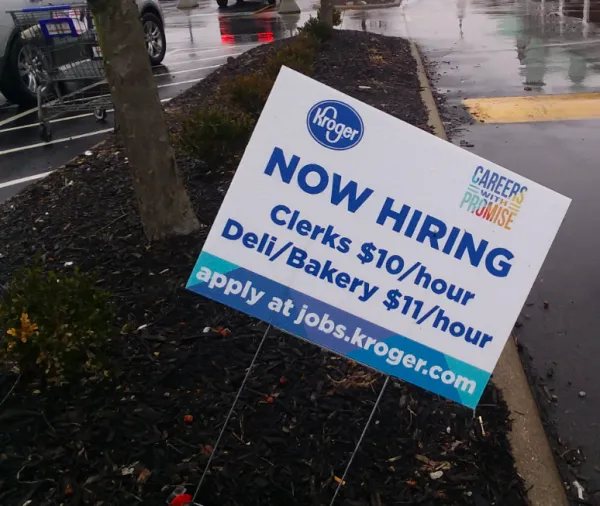
Kroger is the nation’s largest supermarket chain, and arguably Central Ohio’s most popular grocery store.
Yet earlier this week, Cincinnati-based Kroger announced it is ending their $2 more-an-hour “Hero Pay” after May 16th, even as it continues to run expensive commercials thanking its store employees.
Also this week their corporate office released a proxy statement for their June 2020 (virtual of course) shareholders meeting, as reported by the national political news site Popular Information, which is authored by journalist Judd Legum. The Securities and Exchange Commission (SEC) requires companies to provide a proxy statement to shareholders.
Proxy statements reveal CEO compensation, and the Popular Information article states:
If nothing changes, New York State will not have independent candidates on the general election ballot in November. Only candidates who affiliate with a party and win their party’s nomination will be on the ballot this November. Governor Cuomo’s executive order suspending petitioning for independent candidates, for both the Presidential race and for all races down the ballot, offer no alternative to get on the ballot in November. Governor Cuomo must offer a path to the ballot for independent candidates. Otherwise, he risks presiding over a constitutionally defective election. Moreover, in negotiating a path for independent candidates, the Governor needs to move past the petty politics that dominate the party primaries, to end the byzantine petitioning process and to switch to digital or electronic signatures.