
Opinion
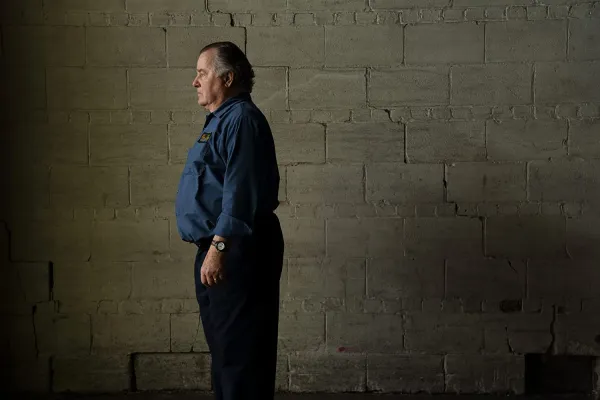
Working Man is a modest story set against the economic landscape that has left thousands of factory workers without jobs. It’s like a fictional counterpart of last year’s award-winning documentary American Factory. (Until it isn’t—of which, more later.)
Peter Gerety stars as Allery Parkes, who has spent decades toiling in a small-town plastics factory. He’s so devoted to the job that, after the owners shut the plant down, he breaks in through a back door and continues reporting to “work” every day. Unable to restart the assembly line because the power has been shut off, he simply switches to cleaning the machinery rather than running it.
Like a modern-day version of Herman Melville’s Bartleby the scrivener, Allery stubbornly clings to a job that no longer exists.
A brief scene in the beginning reveals that the plant shutdown isn’t the first heartache Allery has faced. Years earlier, he and wife Iola (Talia Shire) lost their son to suicide, leaving a mark on them and, no doubt, their marriage. Maybe that helps to explain why Allery is so loath to accept this latest loss in his life.
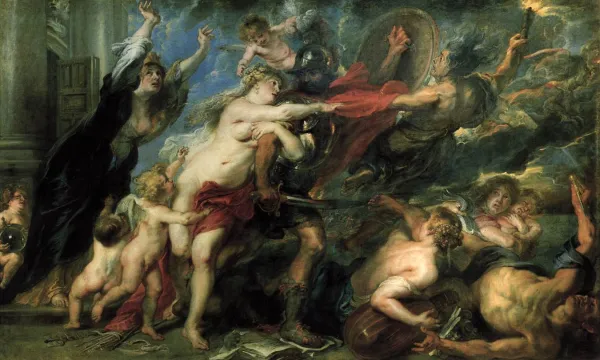
Dan Kovalik’s new book, No More War: How the West Violates International Law by Using “Humanitarian” Intervention to Advance Economic and Strategic Interests — which I am adding to my list of books you should read on why war should be abolished (see below) — makes a powerful case that humanitarian war no more exists than philanthropic child abuse or benevolent torture. I’m not sure the actual motivations of wars are limited to economic and strategic interests — which seems to forget the insane, power-mad, and sadistic motivations — but I am sure that no humanitarian war has ever benefitted humanity.
Kovalik’s book does not take the approach so widely recommended of watering down the truth so that the reader is only gently nudged in the right direction from where he or she is starting. There’s no getting 90% reassuringly wrong in order to make the 10% palatable here. This is a book for either people who have some general notion of what war is or people who aren’t traumatized by jumping into an unfamiliar perspective and thinking about it.


We are being utterly transformed. And the world is being utterly transformed around us.
Ostensibly, this is to tackle a simple virus. In reality, it is to achieve an elite design at staggering cost to humanity and to life generally.
If you have not been carefully following what is taking place, let me highlight some recent developments and what we can do about them.
On 26 March 2020, the World Intellectual Property Organisation (WIPO) granted Microsoft a world patent. Titled ‘1. WO2020060606 – Cryptocurrency System Using Body Activity Data’, this patent gives Microsoft (that is, Bill Gates) extraordinary power over our lives.
As Professor Vandana Shiva evocatively explains in her latest article, ‘My Earth Journey in defence of Biodiversity, Life and Freedom over 5 decades’, this development is ‘robbing us of our deep humanity’:
The patent is dramatically changing the meaning of being human.
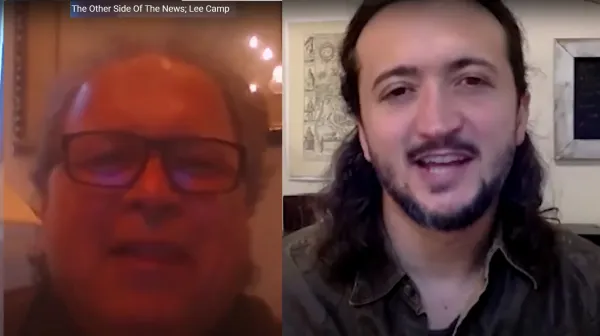
Dr. Bob invites author and political comedian Lee Camp. The host and head writer of Redacted Tonight talks Coronavirus, the coming elections, Jeffrey Epstien and the plight of indigenous people.
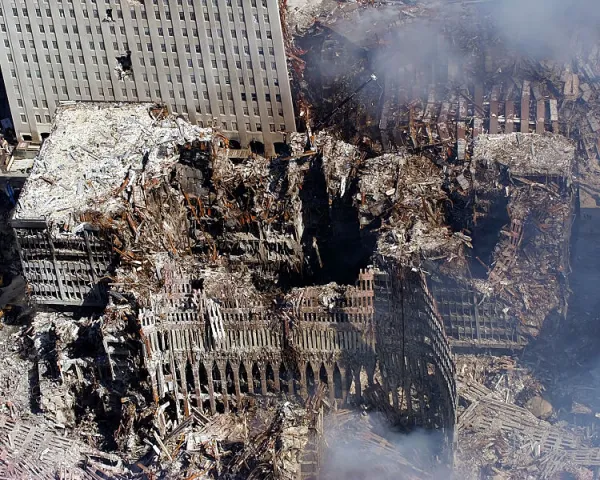
Many media commentators have mentioned that the COVID-19 crisis of 2020 is similar to other national crises that have led the United States into war.
Three other examples include 1] Germany’s sinking of the Lusitania on 5/7/15 (that led to the entry of the US into WWI), 2] the Japanese attack on Pearl Harbor on 12/7/41 (that led to the US entry into WWII) and the self-inflicted, controlled demolitions of the three World Trade Center buildings on 9/11/01 (that led to the G. W. Bush/Dick Cheney administration’s push to invade the Middle East in what many call Operation Iraqi Liberation (“OIL”).
For me, the most pertinent similarity between these events can be stated in the simple truism mentioned in the title above: “The first Casualty of War is Truth.”
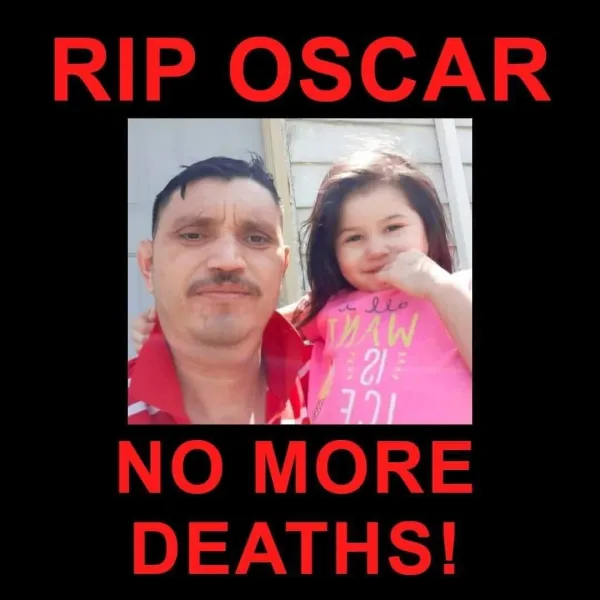
Over the previous five years the Ohio Department of Rehabilitation and Corrections twice told the ICE-contracted Morrow County Correctional Facility its infectious disease control plan was out of compliance. The jail was cited in 2016 and again 2018.
What’s more, the jail was told to collaborate with its local health authority – the Morrow County Health District – to update and improve the plan. The jail is one of four Ohio jails contracted to hold ICE detainees, and about an hour’s drive north of Columbus.
In November of 2019 after another inspection, the Ohio Department of Rehabilitation and Corrections (ODRC) finally found the jail’s infectious disease control plan in compliance.
Nevertheless, as of mid-May, every single inmate at the Morrow County Correctional Facility had tested positive for COVID-19, this according to U.S. District Court judge for the Southern District of Ohio Sarah D. Morrison (a Trump appointee), who so far has ordered the release of 15 ICE detainees from the jail after the ACLU sued ICE.
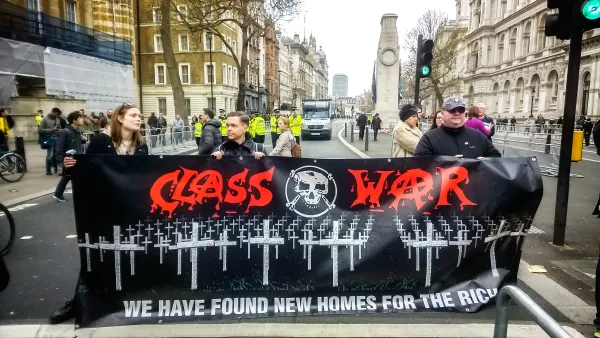
Journalists aren’t supposed to “bury the lead.” But when death is the topic and corporate power is the culprit, the connection routinely goes unmentioned.
Class war -- waged methodically from the top down -- is so constant and pervasive that it might seem unremarkable. The 24/7 siege to make large companies more profitable and the wealthy more wealthy is going on all around us. In the process, it normalizes avoidable death as a cost of doing business.
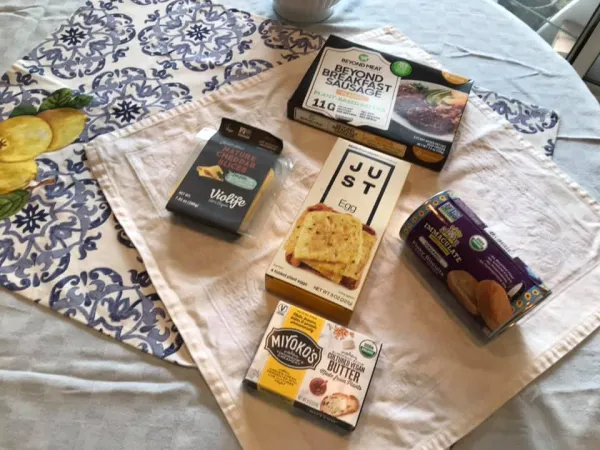
Vegans can live an enjoyable life eating the foods we were raised on in this nonvegan society using the amazing vegan alternatives we have been provided with in the modern, ever-evolving, 100% plant-based marketplace we have today.
Twenty years ago, we ate a more whole foods, an 100% plant-based diet that did not have such remarkable and comparable processed alternatives. While it was, undoubtedly, a much healthier way to eat, it required that we “give up” many of our favorite things and was much more like deprived martyrdom from the nonvegan perspective.
Perhaps this is more convenient and allows us not to feel the selfish notion of being deprived of our favorite and familiar comfort foods, yet that has never really been what veganism was focused on.