
Opinion
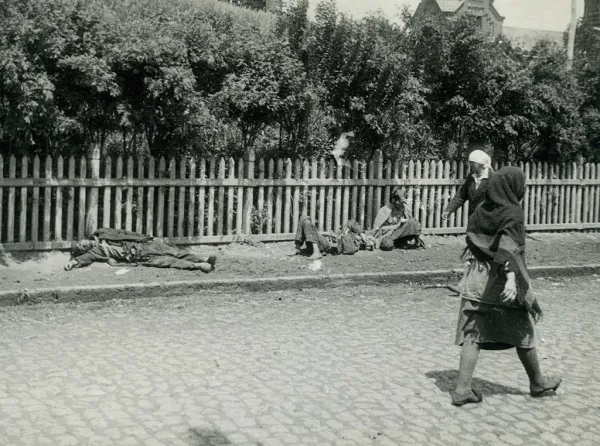
“There are so many . . . primitive tribes — they don’t understand anything.”
The global movement to end racism must turn its attention to the world’s most vulnerable cultures — the indigenous people of Planet Earth — who are still enduring the forces of colonial genocide.
They are, after all, still obstacles to the planet’s moneyed interests.
I say these words not simply because protecting tribal cultures is humane, but also because it could well be crucial to everyone’s survival, including yours and mine. The dismissive arrogance evident in the above quote remains all too common. Those people are . . . savages, whatever, choose your judgmental noun.
The speaker above — the founder of India’s Kalinga Institute of Social Sciences, a.k.a., KISS, which is the world’s largest “boarding school” for indigenous children — called them monkeys. Some 30,000 indigenous, also known as Adivasi, children attend KISS, where, according to Survival International, they are shamed and forced to give up their languages and their cultures and become, you know, regular people.

Even as the door-knocking teams begin their work in contacting as many families in the targeted constituency as possible, the organizing committee and the organizer have a new challenge in modern organization. It’s not the pandemic, which is more than enough to handle, but how to manage social media.
Part of the magic of an organizing drive is the ability to control and develop momentum in the drive working up to a crescendo of excitement at the time of the first meeting. The advent of social media adds some challenges and opportunities to our ability to manage the timetable of the drive and the message being delivered on the doors. Now, many people will be posting on Facebook, tweeting on Twitter, and perhaps even raising alarms on Nextdoor as the teams hit the doors. Not everyone is involved in each of these platforms, but many are involved in at least some of them, and some are involved in all of them, so this becomes a task to add on the list for the committee.
On June 12, 2020, Matt Taibbi published a rather confrontational article entitled “The American Press is Destroying Itself.” In it, he laments that “the American left has lost its mind. It’s become a cowardly mob of upper-class social media addicts, Twitter Robespierres, who move from discipline to discipline torching reputations and jobs with breathtaking casualness.” Taibbi cites a litany of recent “newsroom revolts,” which signal, in his mind, an editorial crisis of political correctness, where journalists have been beaten into submission by the new leftist brigade of groupthink.
To be sure, Taibbi’s concerns are not entirely misplaced. Anyone who’s spent a day on Twitter knows it poses a uniquely high reputational cost for publishing anything even mildly controversial. But Taibbi talks in existential terms. He presents a grand narrative in which the left is cannibalizing itself, supplanting “traditional liberal beliefs about tolerance” and “free inquiry” with “shaming, threats, and intimidation” of those who deviate from the accepted view.
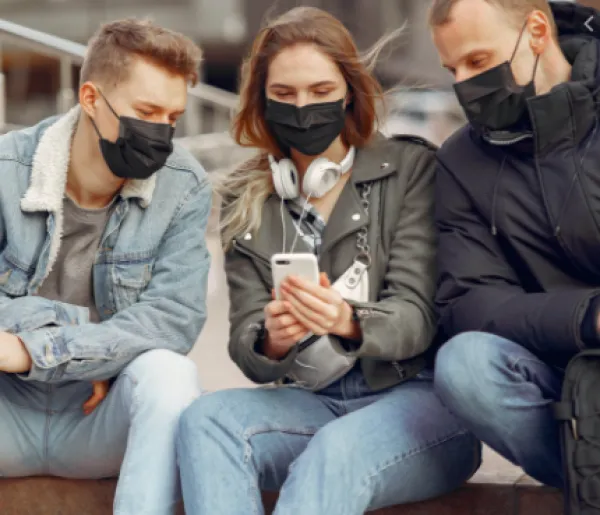
Franklin County’s health department made national news in May after apologizing for issuing mask-wearing guidelines widely denounced as racist. The story was carried in newspapers from the Washington Post to the Seattle Times, in the national magazine The Week and by CNN.
A place the story didn’t make big news, though, was Franklin County itself. Neither the county’s daily newspaper, the Columbus Dispatch, nor the city’s television stations covered it. WOSU Radio carried a small story, for whatever tiny percentage of the county’s residents follow that.
The guidelines stemmed from the April 3 announcement by the Centers for Disease Control and Prevention (CDC) encouraging the public to wear masks to contain the spread of COVID-19. Some racial minorities voiced concerns they could be profiled by wearing masks. Their anxiety presented the health department with an opportunity to educate central Ohioans to shun racist attitudes.
The department instead told racial minorities they were the ones needing to change, advising them:
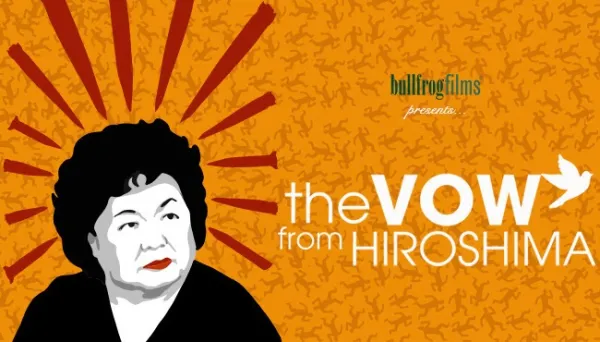
The new film, The Vow From Hiroshima, tells the story of Setsuko Thurlow who was a school girl in Hiroshima when the United States dropped the first nuclear bomb. She was pulled out of a building in which 27 of her classmates burned to death. She witnessed the gruesome injuries and agonizing suffering and indecent mass burial of many loved ones, acquaintances, and strangers.
Setsuko was from a well-off family and says she had to work at overcoming her prejudices against the poor, yet she overcame an amazing number of things. Her school was a Christian school, and she credits as influence on her life the advice of a teacher to engage in activism as the way to be Christian. That a predominantly Christian nation had just destroyed her predominantly non-Christian city didn’t matter. That Westerners had done it didn’t matter either. She fell in love with a Canadian man who lived and worked in Japan.
In a recent “Dilbert” cartoon, the hapless title employee talks about his hope of hooking up with a woman he’d met through virtual contract negotiations—even though, as it turns out, he’s seen only the part of her face that wasn’t hidden by a mask, a shower cap and an eye patch.
For those who lack a regular partner, a pandemic-induced quarantine is hardly the ideal environment for romance. And yet, people can’t turn off their libido simply because it’s not convenient. Recently, the New York City health department acknowledged this fact by releasing guidelines for how to deal with intimacy while minimizing the risk of contracting COVID-19.
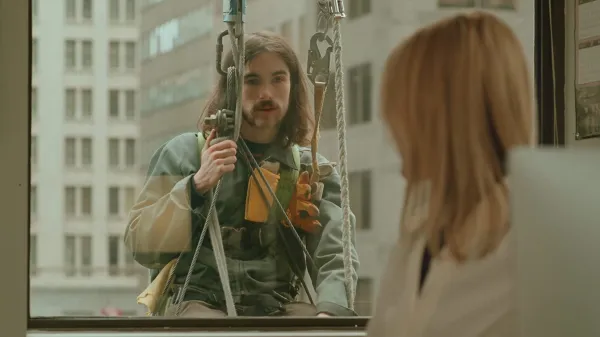
One suggestion it missed: Have a romantic encounter while separated by a thick window several stories above the street. That’s the situation described in Squeegee, an 11-minute film written and directed by Morgan Krantz.
The 8th Annual Columbus Black Theatre Festival (CBTF) is this July 10th thru July 12th!
The festival will be presented as a free live streaming event this year due to COVID-19 social distancing restrictions in Ohio. The CBTF theme is "INCLUSION" which is very appropriate at this time in our society.
The CBTF team received plays from playwrights across the states between November 2019 and February 2020, and through a “blind read process” selected the plays and monologues to be presented, and notified the playwrights on March 1, 2020 that their plays would be produced by Mine 4 God Productions, the producers of the CBTF, at the July festival.
On March 5, Ohio was informed that they would be on a mandate order to stay at home, close up shop, shut down the schools and go out only when necessary. COVID-19 had arrived and everyone, every business, every person had to make an adjustment to the current situation. The CBTF had to also make adjustments to how and if they would be able to present the theatre festival amongst the pandemic.
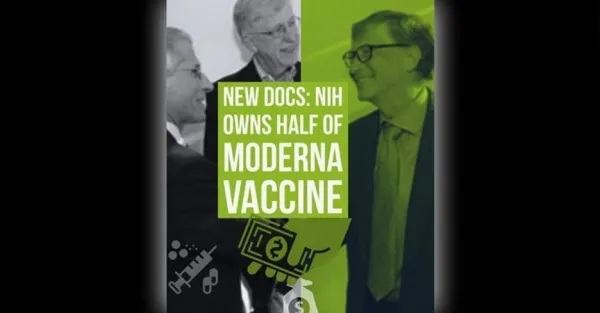
New documents obtained by Axios and Public Citizen suggest that the National Institute of Health (NIH) owns half the key patent for Moderna’s controversial
Change. Now.
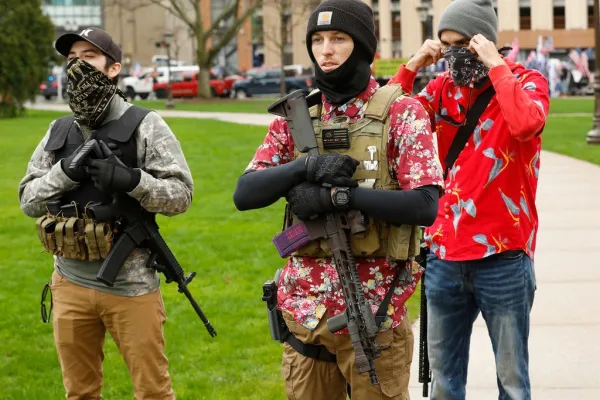
I get that, and understand the symbolism of packed heat. A gun says: We mean business. But that symbolism stops as soon as the trigger is pulled. What the armed protesters could wind up with is a bitter present-day civil war and the blood-stained illusion of change.
The country — and the world — have been in the midst of a social uprising for the past month and a half, ignited by the brutal police killing of George Floyd. The global protests against structural racism have been racially diverse and, for the most part (and except for the police) unarmed. But that’s shifting. Armed black protesters have begun making their presence known. So have armed white counterprotesters.