
Opinion
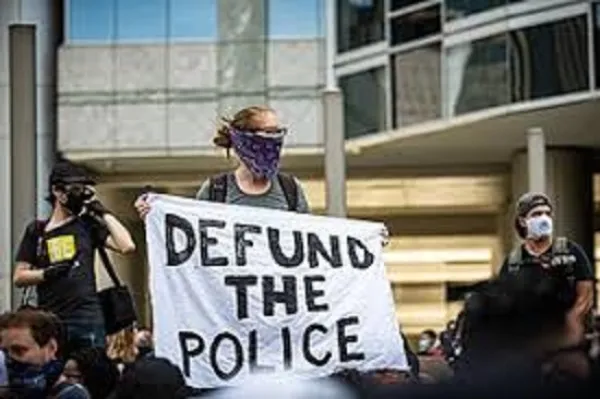
The American police state is currently making its boldest test run to date in Portland, Oregon, escalating violence and lawlessness against the peaceful population of an American city. The people of Portland have responded with increased resistance, but support from officials elected to defend the Constitution is scarce and weak.
Oregon’s two senators, Ron Wyden and Jeff Merkley, are both Democrats with reputations for being on the better side of important issues. But until July 20, their best response to federal secret police operating without restraint in Portland had been to wring their hands and call for a federal investigation of the uninvited federal forces that have ratcheted up street violence and terrorized the city.

WCRS Podcast - fightback
The Other Side of the News - Fascism and the Householder scandal
Submitted by fightback on Fri, 07/24/2020 - 2:07pm Bob interviews John Scales Avery about the state of the world, U.S. and rising fascism. Also he discusses the recent arrest of Ohio Speaker Larry Householder in the nuke bailout scandal. 26:33 minutes (24.43 MB)
On June 24, Donald Trump issued an Executive Order (EO) under the title, Strengthening the Child Welfare System for America’s Children.Except for those whom the EO affects, it has already been stuffed down the Trump memory hole. It is, however, an important document with negative far-reaching ramifications for child welfare in the US. To the casual reader, the Executive Order can look benign, positive: a plan for expanded federal child welfare assistance programs to enhance sibling retention, family preservation, unification, permanency, aging out as well as strengthening trauma-informed training and best practice and better reporting standards. It appears to concede a fractured child welfare system, but…

Remarks at Peacestock 2020
Imagine you’re stranded on a barren rock in the middle of the ocean, nothing in sight but the endless sea. And you’ve got a basket of apples, nothing else. It’s a huge basket, a thousand apples. There are various things you could do.
You could allow yourself a few apples a day and try to make them last. You could work on creating a patch of soil where apple seeds could be planted. You could work on starting a fire in order to have some cooked apples for a change. You could think of other ideas; you’d have plenty of time.
What if you were to take 600 of your 1,000 apples and throw them as hard as you could into the water, one by one, in hopes of hitting a shark, or scaring all the sharks of the world so that they wouldn’t come near your island? And what if a voice in the back of your head were to whisper to you: “Psst. Hey, buddy, you’re losing your mind. You’re not scaring sharks. You’re more likely to attract some monster than to get a message out to all the monsters in the world. And you’re going to starve soon at this rate.”

In the 1970s, the country was struggling to recover from the dual tragedies of the Vietnam War and the Watergate scandal that toppled the Nixon presidency. That helps to explain why so many Americans were attracted to the “Moonies,” a Korean-born cult that promised to unite and heal the world.
Blessed Child is a documentary by and about a woman who was raised in a Moonie family and found the religion a comfort and an inspiration—until it wasn’t. Then it became an impediment to her happiness and threatened to drive a wedge between her and her devout parents.
Directed by Cara Jones and filmed by her brother Bow, the doc is a gentle yet wrenching portrait of a family that was at first united and later divided by the Rev. Sun Myung Moon’s Unification Church.

As the combined impact of the corona virus and the wholesale destruction of America’s history and culture, or at least the part of it that is white, continues, it is nice to see that other nations are getting into the game that will lead to the de facto elimination of western civilization. No one is yet quite up the U.S. level of senseless destruction and looting by the heroes of Black Lives Matter (BLM) and Antifa, but in Britain mobs are beating policemen, statues including that of Winston Churchill are being attacked and the Cenotaph commemorating the country’s war dead has been vandalized. In a bizarre incident demonstrating the fundamental ignorance of the wreckers, a memorial to those who died at the 1651 Battle of Worcester in the English Civil War has suffered “significant damage”, with the letters BLM painted on the marker.

Did you miss the July Free Press Second Saturday Cyber-Salon?
If so, here's a run-down of what happened and how you can be involved next time!
Speakers were Mia Santiago, one of the founders of the Columbus Freedom Coalition spoke about that group that works with prisoners and on social justice issues.
OSU Professor Pranav Jani discussed the current struggles to make change with the city and police force and had a great analysis on how we can keep the momentum going.
We saw a series of photos taken by Paul Becker who has been a persistent documentarian of the events happening since the George Floyd murder protests began.
Mary Jane Borden spoke about the racist drug war. Victoria Khan, Angelica Warren and Amy Wolfinbargerof the Ohio Rights Group spoke on marijuana issues. We heard about the atrocious drug charges brought against Peggy Sue Kimmel and Glenn Keeling of Mercer County, Ohio.
Human nature as a central theme of philosophy
What is human nature? Are we humans good or evil? To what extent is the character of a person produced by heredity, and to what extent by environment? Is competition more central to our existence than cooperation, or is it the other way around? How can a happy, peaceful and stable society be created? Are humans essentially the same as other animals, or are we fundamentally different? Should humans dominate and control nature, or should we be the custodians of nature? These questions are central to philosophy. Conflicting answers have been given by philosophers, scientists and religious leaders offer the centuries, from earliest times until the present.
The chemistry and physiology of emotions
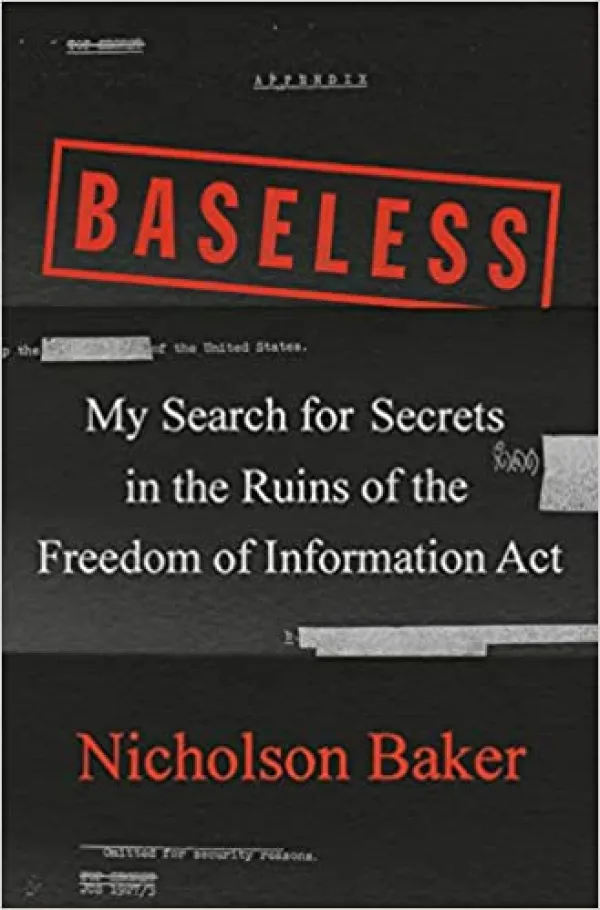
Nicholson Baker’s new book, Baseless: My Search for Secrets in the Ruins of the Freedom of Information Act, is staggeringly good. If I point out any minor complaints with it, while ignoring, for example, the entirety of Trump’s latest press conference, this is because flaws stand out in a masterpiece while making up the uniform entirety of a Trumpandemic Talk.
Baker begins as if he has an unanswered and possibly unanswerable question: Did the U.S. government use biological weapons in the 1950s? Well, yes, of course it did, I want to reply. It used them in North Korea and (later) in Cuba; it tested them in U.S. cities. We know that the spread of Lyme disease came out of this. We can be pretty confident that Frank Olson was murdered for what he knew about U.S. biological warfare.
It’s not clear at first, as it seems later, that Baker is suggesting much more uncertainty than he actually has — presumably because that’s what you do toward the beginning of a book in order to not scare away the fragile readers.
Asia, Europe, Immorality, North America, South America
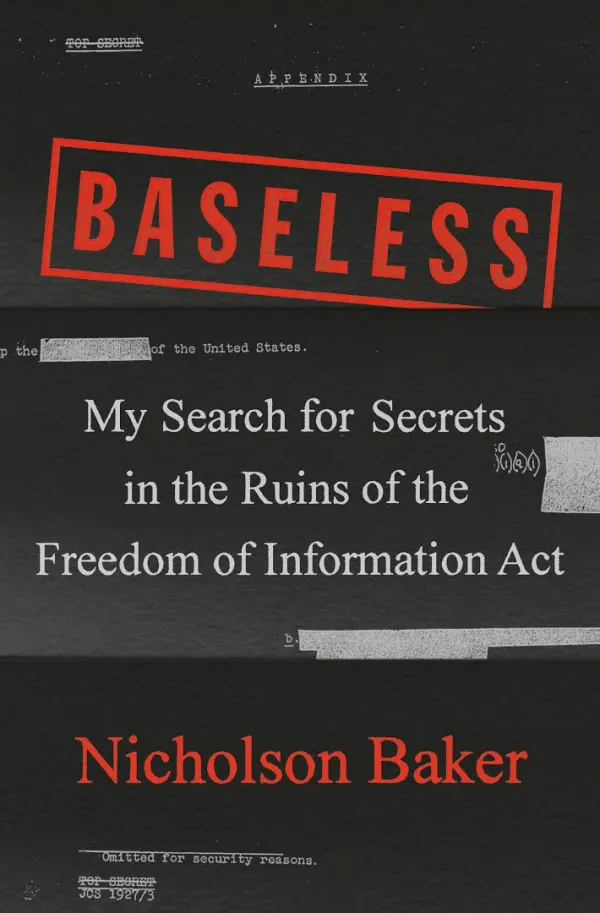
Nicholson Baker’s new book, Baseless: My Search for Secrets in the Ruins of the Freedom of Information Act, is staggeringly good. If I point out any minor complaints with it, while ignoring, for example, the entirety of Trump’s latest press conference, this is because flaws stand out in a masterpiece while making up the uniform entirety of a Trumpandemic Talk.
Baker begins as if he has an unanswered and possibly unanswerable question: Did the U.S. government use biological weapons in the 1950s? Well, yes, of course it did, I want to reply. It used them in North Korea and (later) in Cuba; it tested them in U.S. cities. We know that the spread of Lyme disease came out of this. We can be pretty confident that Frank Olson was murdered for what he knew about U.S. biological warfare.