
Opinion
According to B’Telsem, for Palestinians, this was the deadliest year since 2014.
There are no statistics that can measure the pain and sorrow of their family members and friends of these victims of violence on both sides of this conflict. What follows is just a snapshot of the human rights violations in 2021, and suggestions for actions that we can take to help bring an end to the violence for the benefit of all people in the region.
Statistics from the United Nations Office of Humanitarian Affairs for 2021 (OCHA oPt)
Palestinian deaths - West Bank 82 (including 15 children); Gaza 264 (including 67 children)
Palestinian injuries - 17,895
Israeli deaths - 16 (including 2 children)
Israeli injuries - 158
Source: https://www.ochaopt.org/data/casualties.
The first 911 call went out around 10:41. More than 200 local police and FBI agents responded to the scene and established telephone contact with Akram, whose responses were inconsistently coherent. The four hostages assisted with translation. Akram repeatedly said he was going to die. He also repeatedly called for the release of a US prisoner held in a nearby facility, Dr. Aafia Siddiqui, whom he referred to metaphorically as his sister.
Around 5 p.m., Akram released one hostage. According to the other hostages later, the negotiations deteriorated and Akram grew more agitated. Relying on previous training in handling hostage situations, Rabbi Cytron-Walker maneuvered the group closer and closer to an exit. Around 9:30 he decided the moment had come, he threw a chair at Akram, and the three hostages ran safely out an exit door.
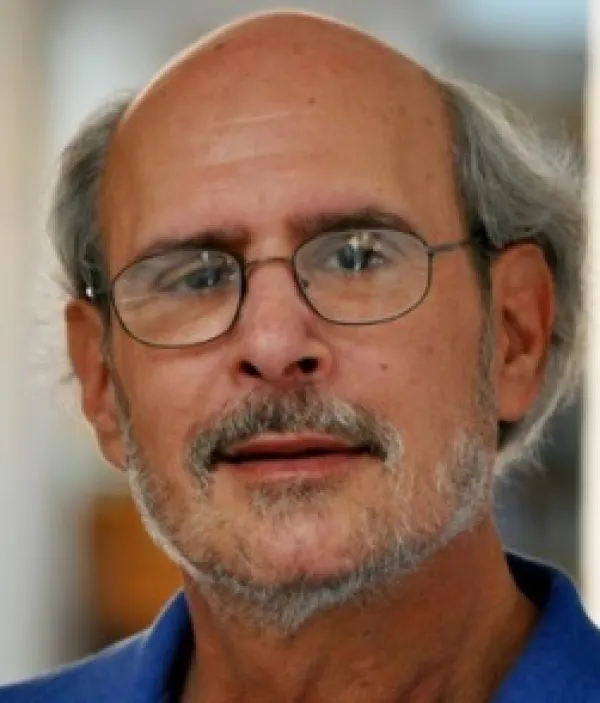
Readers viewing this essay online may no longer recognize or appreciate how important a city’s daily newspaper is. It contributes to a city’s identity. It unites its readership in shared information, which is the potential for building a community of discourse and exchange. The best newspapers provide both a constructive critical voice and a forum for responsible airing of differences among members of the local population. This is not, and has never been, the function of the Columbus Dispatch.
Since childhood, I have avidly read my city’s daily newspaper(s) and the Sunday New York Times. From college, I subscribed in every city where I lived. In retirement, I read three dailies including two national editions. I have read the Columbus Dispatch since I moved to Columbus in 2004. I have witnessed a roller-coaster of journalistic and commercial ups and downs and published opinion essays and letters to the editor.
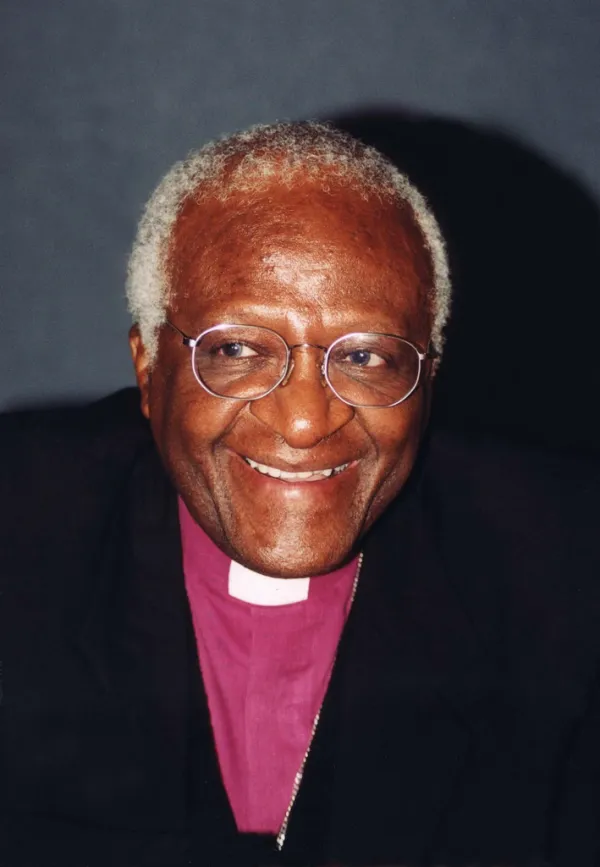
Long before intersectionality became a prevailing concept which helped delineate the relationship between various marginalized and oppressed groups, late South Africa’s Archbishop Desmond Tutu said it all in a few words and in a most inimitable style. “My humanity is bound up in yours, for we can only be human together,” he said.
Like other freedom and justice icons, Tutu did not merely coin the kind of language that helped many around the world rise in solidarity with the oppressed people of South Africa, who fought a most inspiring and costly war against colonialism, racism and apartheid. He was a leader, a fighter and a true engaged intellectual.
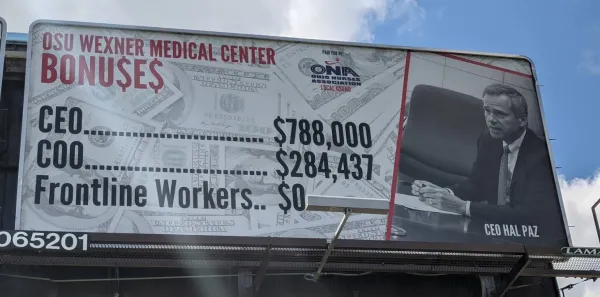
They decided their life’s work was going to be saving other peoples’ lives. But no other group of professionals has had a reckoning during the pandemic as nurses and doctors have. And while they are expected to work long hours in horrendous situations, hospital executives are awarding themselves generous bonuses.
The turnover and resignations of healthcare workers is not entirely due to the pandemic’s crush. But how their employer has treated them during the (seemingly) worst healthcare crisis ever.
“Every hospital system in Ohio is standing on the back of all the staff demanding they work harder,” wrote a nurse.
At the start of the pandemic the Free Press wrote about the mind-boggling situation The Ohio State University Wexner Medical Center was in when they set up an outdoor donation triage asking the community for extra masks and other PPE.
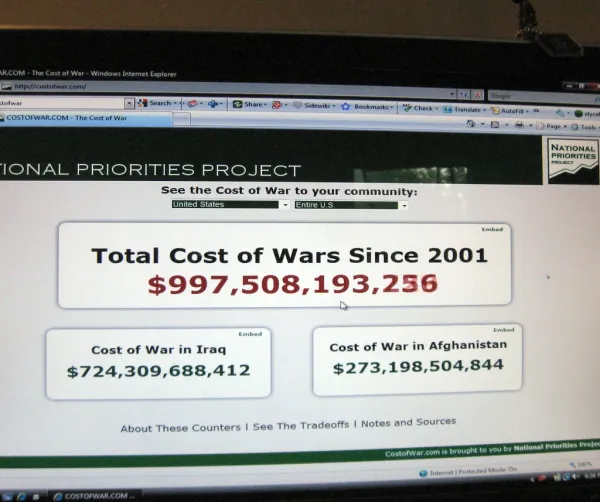
The final big legislative achievement of 2021 was a bill authorizing $768 billion in military spending for the next fiscal year. President Biden signed it two days after the Christmas holiday glorifying the Prince of Peace.
Dollar figures can look abstract on a screen, but they indicate the extent of the mania. Biden had asked for “only” $12 billion more than President Trump’s bloated military budget of the previous year -- but that wasn’t enough for the bipartisan hawkery in the House and Senate, which provided a boost of $37 billion instead.
Overall, military spending accounts for about half of the federal government’s total discretionary spending -- while programs for helping instead of killing are on short rations at many local, state, and national government agencies. It’s a nonstop trend of reinforcing the warfare state in sync with warped neoliberal priorities. While outsized profits keep benefiting the upper class and enriching the already obscenely rich, the cascading effects of extreme income inequality are drowning the hopes of the many.
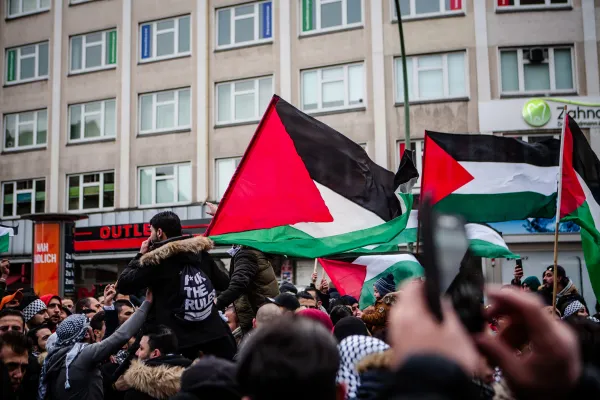
As soon as media reports emerged regarding a deal between Palestinian prisoner, Hisham Abu Hawash and the Israeli prison authorities, Israeli extremists, led by Knesset member Itamar Ben-Gvir, angrily raided the Assaf Harofeh Hospital where Abu Hawash was being held.
The Constitution begins, “We the People of the United States, in Order to form a more perfect Union, establish Justice, insure domestic Tranquility, provide for the common defence, promote the general Welfare, and secure the Blessings of Liberty to ourselves and our Prosperity.” All states endorse this “founding,” if aspirational, text. American history, even before 1776 and 1787 and long after those dates, has been devoted to making those aspirations a reality for all Americans.
A dominating conception of “the public” is central to the U.S. in theory and centuries-long struggles. Today represents an extraordinary retreat, especially for people other than white males. For the partly empowered peoples from 1863-65 “emancipations” through women’s suffrage in1920 and civil and voting rights legislation in 1965, an inclusive public has always been contested. The battle increases anew with the combined and interconnected assaults on public health, public education, public safety, genuine choice and freedom, right to vote, right to control one’s body, right to gender determination, right to....
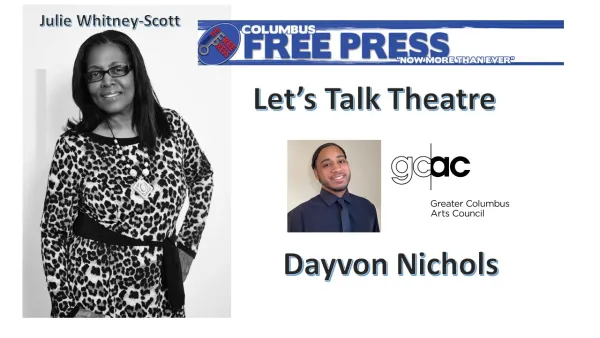
Let’s Talk Theatre with Julie Whitney-Scott
Julie: Let’s meet Dayvon Nichols from the Greater Columbus Arts Council (GCAC).
Dayvon: I was born and raised in Cleveland. I came to Columbus to attend The Ohio State University to pursue an Arts Management Degree. I was in plays in Little Theatre in high school and performed in two plays at The OSU. I did Hairspray twice and another one, so I’m pretty familiar with the theatre field. I’m excited to be here and I love connecting with artists. One of my passions is to help people out and I’m grateful to have this opportunity today.
Julie: What is your position at GCAC?
Dayvon: I am the Grants Associate and serve as the point of contact for all individual artists. I am the contact if you are an independent professional artist seeking grant assistance, or if you are curious as to what resources and support the Greater Columbus Art’s Council has to offer.
Julie: What grant is available to support artists in their craft?
Guess what? I direct the following insight to, among others, the U.S. Congress, which annually and without comment, with only a few objectors, passes a trillion-dollar (and growing) military budget, by far the largest such budget on Planet Earth.
“You cannot simultaneously prevent and prepare for war.”
The words are those of Albert Einstein, in a letter to a congressman 75 years ago. He adds, pointing out a truth that is still waiting to resonate culturally and politically: “The very prevention of war requires more faith, courage and resolution than are needed to prepare for war.”