
Opinion
If you depart from an "us vs. them" philosophy of life, your first confrontation is likely to be with the cynics.
Perhaps the most important thing I learned was how deeply and intensely people wanted to be listened to.
Last week, for instance, I wrote about the weekend I spent, a decade ago, getting handgun training from the NRA—and what I learned, which is that the things you need to fear are endless, and when one of them pops up in your life you'd better be prepared to kill it. One reader said he wondered "if Robert has ever truly felt as though his life or those he values were threatened" and quickly answered his own question: Of course not! And then he crooned, oh so tenderly: "Must be nice for Robert to live in such an insulated bubble."
Issue solved! Everyone needs a gun, except for the utterly naïve.
If I'd had a gun, I may have taken aim at this snarky fool, but eventually I started calming down and thinking about his words—this monkey wrench of cynicism, as I called it—with slightly more positive energy.
All codependent relationships cause collateral damage. In the case of a failing marriage with children, the parent’s spawn tend to bear the brunt of the damage. In the case of the City of Columbus and big business, our people bear the brunt -- and many while accepting our lot as business-as-usual. In the meantime, our housing crisis puts increasing pressure on our most vulnerable populations. Often those in positions of power and specifically equipped to handle these crises are too far removed from them to understand their urgency on anything but an academic level.
During a podcast interview a few years ago, Council President Shannon Hardin described the nature of his position in business terms: The City of Columbus, in his view, is a corporation. The Mayor is our CEO and the Council President is our head of the Board of Directors.

Full-time Kroger store employees in Central Ohio who are also members of United Food and Commercial Workers Union 1059 (UFCW) overwhelmingly voted “no” this week to a new three-year contract.
No doubt this is another victory for the working class of Central Ohio, as the Free Press spoke to over a dozen local Kroger employees and all agreed this is the first time in at least two decades a contract has been sent back to the bargaining table demanding higher pay, more benefits, and – most importantly – more respect.
Earlier this week local Kroger employees were telling the World Socialist Web Site (WSWS.org) that the three-year deal was “abysmal” or “woefully inadequate,” and that the UFCW “has sold out to Kroger.”
Disturbing is how this labor story will probably be told by only WSWS.org and the Free Press because the rest of the local media is sold out to the Cincinnati-based Kroger ad dollar.

Terrapin Moon came on after the white-hot fireballs known as Electric Orange Peel (should say 'Atomic' Orange Peel). A Grateful Dead cover/tribute band whose version of China Cat Sunflower/I Know You Rider was spot-on, the mournful Rider insertion choking me up, my dear beautiful brother Bob having passed last year and it was like he was singing to me, "gonna miss me when I'm gone."
Before the song was over I was pedaling home, overcome by the sad refrain, missing my gone brother, the sunglasses I found in his basement hiding the tears pouring out of my sad eyes.
Two years of no music. Then one refrain from one Dead song with a borrowed blues motif and I'm reduced to nothing but humanness. Trust me, I don't think I'm special. But he was, my dear brother Bob. And so was that song.
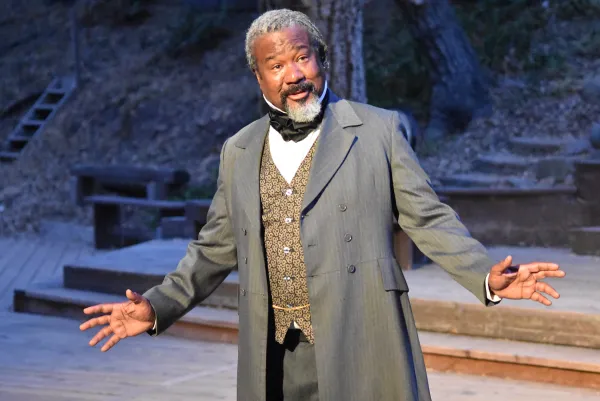
There are three great acts of naval rebellion in nautical history and the one that’s been the least celebrated in popular culture – until now – is (finally!) the subject of Trouble the Water. Ellen Geer’s stage adaptation of Rebecca Dwight Bruff’s 2019 novel of the same name dramatizes the remarkable real-life saga of Robert Smalls, who was born enslaved in 1839 and rose to become one of the Civil War’s great heroes and among America’s first Black Congressmen, initially elected during the Reconstruction Era.
Smalls’ stunning story is so phenomenal that it takes no less than two thespians to depict this Black Spartacus: A simmering Terrence Wayne, Jr. (whose credits include Will Geer’s Theatricum Botanicum’s production of Ibsen’s Enemy of the People) as the youthful slave-turned-revolutionary aptly nicknamed “Trouble,” and Gerald Rivers as the postwar Republican statesman who, having met Honest Abe during the Civil War, may have coined the phrase that refers to the GOP as “the party of Lincoln.” Rivers, a WGTB stalwart and, quite appropriately, a renowned Martin Luther King reenactor, also directs Trouble the Water.
The Shameful UN ‘List of Shame’: Equating between the Israeli Perpetrator and the Palestinian Victim
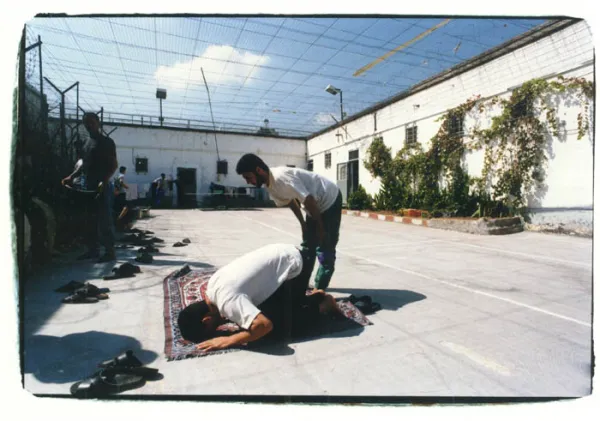
“We regret we failed to protect you.” This was part of a statement issued by United Nations human rights experts on July 14, urging the Israeli government to release Palestinian prisoner Ahmad Manasra. Only 14 years old at the time of his arrest and torture by Israeli forces, Manasra is now 20 years old.
In the outpouring of reporting and opinion writing about today’s unprecedented campaigns for unconstitutional book banning and suppression of free speech, on the one hand, and locally-rooted, one shop at a time, unionization drives, on the other hand, a fundamental common element is not acknowledged. Resistance to book bans and censorship of curriculum and reading materials in classrooms and libraries, and efforts to unionize are most often locally-based among groups and individuals whose interests often align.
Their connections on multiple levels are seldom recognized. Despite the continuing lack of communication and coordination, the terrain of single institutions includes campaigns to organize graduate students, undergraduate student workers, faculty, staff, and librarians, and also local bookstore employees. They strikingly overlap. They cry for connections and commonality: genuine coalitions crossing vertical and horizontal spaces. Local and state activists tell me about much more inter-union and intra-institutional cooperation than the media report. (Thanks to Matt Ides and Thomas Johnson for comments on their relevant experiences over many years.)
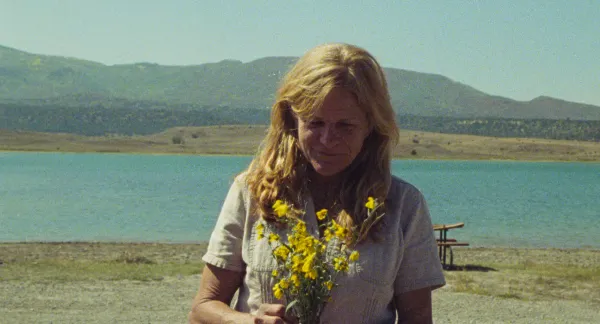
At a time when superhero and other action flicks explode and careen across our screens, with its decidedly indie sensibility, Max Walker-Silverman’s little gem A Love Song goes against the blockbuster grain. It is as gentle as Marvel Universe flicks are violent. With its simple, naturalistic style tinged by sly humor, A Love Song is a motion picture paean to the human condition, filled with yearning, grief, loss and the quest for meaningful (if not necessarily long-lasting) connection and love.

In a blog entry, reflecting on the G20 Foreign Ministers' meeting in Bali, Indonesia, on 7-8 July, the High Representative of the European Union, Josep Borrell, seems to have accepted the painful truth that the West is losing what he termed "the global battle of narratives".
"The global battle of narratives is in full swing and, for now, we are not winning," Borrell admitted. The solution: "As the EU, we have to engage further to refute Russian lies and war propaganda," the EU's top diplomat added.
Borrell's piece is a testimony to the very erroneous logic that led to the so-called 'battle of narratives' to be lost in the first place.
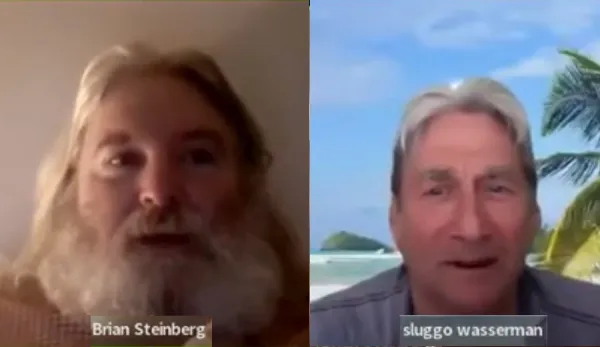
We hear from BRIAN STEINBERG about Michigan’s amazing statewide referenda to win a Constitutional Amendment guaranteeing a woman’s right to control her body, and to make it easier for ordinary citizens to exercise their democratic rights.
An astonishing 750,000+ signatures have been gathered, guaranteeing a sea change in Michigan politics that should be matched throughout the country if the progressive movement was actually awake.
JOEL SEGAL, WILLIE FLEMING, RAY MCCLENDON and ROBERT WILSON then fill us in on the all-important grassroots/relational organizing in North Carolina and Georgia, two states that would swing the entire nation.
Florida’s JIM LANGFORD joins Oregon’s LAWRENCE TAYLOR & SHERRY HEALY to update the Progressive Democrats of America’s work to democratize the Democratic Party.
TATANKA BRICCA then updates us on California’s campaign for a Green New Deal and the desperate attempt to get the horrendous Diablo Canyon shut before it unleashes an apocalyptic cloud killing millions of people and permanently destroying the American ecology and economy.