
Opinion

We live in an age of division. As the briefest glance at news media shows, contemporary universities are so often centers of differences, contradictions, and clashes between knowledge and ignorance off- and on-campus. One revealing site of combat is the false opposition of the faculty and the—to faculty and academic administration—second-class “professionals” in departments of student affairs and student life. This dichotomy, and its underlying both real and imaginary conflicts, critically parallels those between “learning and earning,” humanities’ core curriculum and “great books” vs. STEM and business education, curriculum vs. extracurriculum, and on-campus vs. off-campus life.
In this essay, as a retired humanities professor who taught for almost half a century at three public universities in large cities, and who lives in my city’s University District, I propose to seize on the strengths of both sides of what I see as a fallacious and harmful dichotomy. I seek to bring them closer together in the interests of undergraduate, graduate, and professional students, the suffering health of our universities, the advancement of young adults, and the needs of our nation.

(Presentations by Dr. Yurii Sheliazhenko, executive secretary of Ukrainian Pacifist Movement, at the International Peace and Planet Network conference in New York and at the 2022 World Conference against A and H Bombs in Hiroshima.)
“Thank God Ukraine learned a lesson of Chernobyl and got rid of Soviet nukes in the 1990s.”
Dear friends, I am glad to join this important peacebuilding dialog from Kyiv, capital of Ukraine.

77 years ago (August 9, 1945) an all-Christian bomber crew dropped an experimental plutonium bomb on Nagasaki City, Japan, instantly incinerating, asphyxiating and/or vaporizing tens of thousands of innocent civilians, mostly women and children. Very few Japanese soldiers were killed by the bombs.
Japan’s major religions are Shitoism and Buddhism, but a disproportionate number of the dead at Nagasaki were Christian. The bomb also wounded uncounted tens of thousands of other victims who suffered the blast trauma, the intense heat and/or the radiation sickness that killed and maimed so many of the survivors.
In 1945, the US regarded itself as the most Christian nation in the world and the bomber crew reflected that reality. The small United States Army Air Force (USAAF) unit that was charged with dropping the atomic bombs (the 509th Composite Group) even had two Christian military chaplains assigned to it. They all were products of the type of Christianity that failed to teach what Jesus taught concerning homicidal violence (ie, that it was forbidden to his followers).
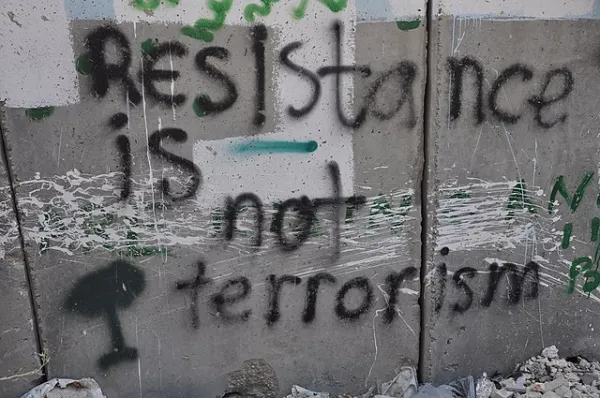
Until recently, Israeli politics did not matter to Palestinians. Though the Palestinian people maintained their political agency under the most demoralizing conditions, their collective action rarely influenced outcomes in Israel, partly due to the massive discrepancy of power between the two sides.
Now that Israelis are embarking on their fifth election in less than four years, it is important to raise the question: “How do Palestine and the Palestinians factor in Israeli politics?”
Israeli politicians and media, even those who are decrying the failure of the ‘peace process’, agree that peace with the Palestinians is no longer a factor, and that Israeli politics almost entirely revolves around Israel’s own socio-economic, political and strategic priorities.
This, however, is not exactly true.

“I humbly beg forgiveness for the evil committed by so many Christians against the Indigenous Peoples.”
So said Pope Francis last week, at a powwow in Alberta, at the start of his “apology tour” across Canada — for the participation of the Catholic Church in the multi-century horror of Native American “residential schools” on this continent, which more accurately might be called concentration camps for 6-year-olds.
This papal mega-apology, while cheered by some, has been widely criticized as little more than a wimpy shoulder-shrug — sorry about that — for a governmental, church-complicit policy, lasting well into the 20th century, of snatching indigenous children from their families and squeezing their culture, if not their life, out of them.

When New York City recently released a grotesque “public service announcement” video explaining that you should stay indoors during a nuclear war, the corporate media reaction was principally not outrage at the acceptance of such a fate or the stupidity of telling people “You’ve got this!” as if they could survive the apocalypse by cocooning with Netflix, but rather mockery of the very idea that a nuclear war might happen. U.S. polling on people’s top concerns find 1% of people most concerned about the climate and 0% most concerned about nuclear war.

Can’t Believe It’s Vegan (CBIV) is located in the strip mall at Shrock and Cleveland Ave just north of 270 (Opposite Raisin Rack) in Westerville, had its grand opening for the brick and mortar location in July 2022. Previously, before Chef Clayton Freeman of CBIV had added his dynamic wife Kim to run the restaurant, he had been serving the Columbus metropolitan area as a solo operation doing individual special order and catering/delivery service out of Food Fort since 2018, so while the brick and mortar operation is new, their delicious foods are not.
If you had not discovered them before, today is your chance to “Become a one bite believer”! They serve a full menu for breakfast, lunch, dinner, dessert and even offer a traditional veganized Sunday brunch menu. If you do not want to dine-in, you may still order same day online at cantbelieveitsvegan.biz if you order by 11 am, or place order on the day before (by 15 minutes before closing time) your event!

Do the Mayor, City Council, and senior staff need a map of Columbus? A walking tour? A bus tour of their “Opportunity for a Few City”? They cannot turn to Columbus Partnership whose CEO lives in New Albany, the Downtown Development Corporation which does recognize the actual downtown, Columbus Police Department who does not know one area from another, or the Department of Public—that is, Private—Service who sells public space to private interests indiscriminately. I personally give walking tours of the University District to City Neighborhood staff but I recognize my limits. City government does not know the city.
The Mayor’s and Council’s obsession with protecting private property in the Short North—the only area where their actions even vaguely resemble a policy—that is, a set of somewhat related actions rather than random undeveloped and unvetted stabs in the dark—and with environmental damage to the Scioto River Bank with private development convince me that our undemocratically selected “leaders” do not know the locations or the socio-economic geography within Columbus whose history and identity remain unknown.

Director Baz Luhrmann (“Romeo+Juliet,” “Moulin Rouge” and “The Great Gatsby”) dials the notches up to 11 to tell the chaotic and electric story of Elvis Presley’s (Austin Butler) rise to unprecedented super-stardom to sudden tragedy in this exuberant biopic “Elvis.” Delving into the many stages of Elvis’ career, from a hip-swiveling sex symbol to a B-movie superstar, to an irrelevant has-been, to the comeback King of Las Vegas, and finally to his tragic death at the young age of 42. Demonstrating the rollercoaster ride of a career. This film will leave you falling in love with Austin Butler’s performance as the king.

To describe US President Joe Biden's recent visit to Israel and Palestine as a "failure" in terms of activating the dormant "peace process" is to use a misnomer. For this statement to be accurate, Washington would have had to indicate that it had even a nominal desire to push for negotiations between the Israeli government and the Palestinian leadership.
Political and diplomatic platitudes aside, the current US administration has done the exact opposite, as indicated by Biden's words and actions. Alleging that the US commitment to a two-state solution "has not changed", Biden dismissed his administration's interest in trying to achieve such a goal by declaring that the "ground is not ripe" for negotiations.