
The administration of Donald Trump is making an unbridled push to block renewable
energy projects—including last week halting the placement of 54 wind turbines in the ocean
south of Long Island, New York—and is pushing fossil fuels, among them coal. The burning of
fossil fuels is the leading cause of climate change. Trump has repeatedly called climate change a
“hoax.”
Meanwhile, a Long Island resident, Lee Zeldin of Shirley, who Trump named
administrator of the U.S. Environmental Protection Agency, is cancelling on a sweeping basis
environmental regulations, discharging EPA employees and, last week, stopping the collection of
greenhouse gas emission data.
Further, on April 8 th Trump issued an executive order directing the U.S. attorney general
to identify “illegal” state and local climate, energy and environmental justice laws that “impede”
domestic energy production and use and “take all appropriate action to stop” their enforcement.
The order is titled: “Protecting American Energy From State Overreach.” It opens: “My
Administration is committed to unleashing American energy.”

Haga clic aquí para español
Has any Ohio citizen-led amendment worked this hard, overcome so many hurdles, and faced such disingenuous opposition from their own state government to get its constitutional amendment in front of voters?
“No,” Cynthia Brown said bluntly to the Free Press. Brown is the energy and leadership behind the Ohio Coalition To End Qualified Immunity.
Wen it comes to changing the policy which shields Ohio law enforcement from civil litigation after violating the civil rights of those they’ve sworn to protect, the Ohio Coalition To End Qualified Immunity (OCTEQI) always knew the challenge would be daunting. Afterall, they were up against the GOP-besieged executive offices of the Ohio Statehouse, which rejected their amendment nine times, making them re-start the process from the beginning each and every time.

Columbus Women’s Chorus, central Ohio’s only feminist chorus, will continue celebrating its 35th year with the world premiere of a commissioned work Dance the Wind, with music by Assistant Artistic Director / Accompanist Sheena Phillips and lyrics by soprano Bobbie Brooks. The Artistic Director is Lisa Springer.
The chorus will perform a wide variety of contemporary music, from folk to classical to blues, with new repertoire plus favorites chosen by members of the chorus, now 80 singers strong.
Due to a sold out concert last November, there will be two shows this spring.
Saturday May 3 and Sunday May 4
First Unitarian Universalist Church
93 W. Weisheimer Rd. in the Clintonville neighborhood
Doors open at 6:30pm for both concerts, which will begin promptly at 7:00.
The venue is handicap accessible and the concerts will be interpreted for the hearing impaired.
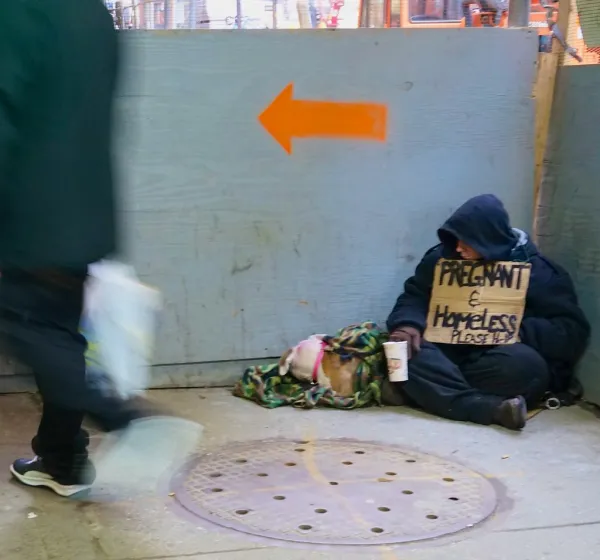
Homelessness and substance use disorder often occur simultaneously — but many people struggling with both are unable to get the help they need. That puts homeless service providers on the front lines of the battle for reversing overdoses while also trying to end homelessness, one life at a time.
As the CEO of a large homelessness service provider, I’ve seen first-hand how helping someone overcome substance use can lead directly to helping them overcome homelessness.
Ending homelessness is a long process. It isn’t all about lifting someone off the streets and finding them a job and a place to call home. There’s a spectrum of steps and successes along the way to help someone build confidence and independence so they can make long-term positive lifestyle changes.
Overcoming substance use is one of those steps. We have a number of strategies to approach substance use that have offered positive results. The first is the overarching principle of harm reduction, which we use because it saves lives.

Tax policy experts and lawmakers have long circled 2025 as a year to prepare for. What makes it so significant?
For one thing, Federal COVID money to states is expiring, straining state budgets at the same time the economy is starting to weaken. For another, Republicans in Congress are working to increase and extend President Trump’s tax cuts for the wealthy and corporations — while cutting trillions from health care, housing, and education programs for everyone else. And it all up and you get a fiscal tsunami.
While major tax policy changes are being made and discussed in Congress, this is also happening in the states.
None of these efforts have an isolated impact. What’s happening in Washington, DC and state capitals will affect your families — especially in rural communities. And people everywhere are going to feel it in their pocketbooks if our legislators cave and shift more taxes from the rich to the rest of us.


As the Circuit Courts and Supreme Court are increasingly called upon to correct immigration injustices, people are starting to realize that the U.S. immigration courts do not operate with independence and fairness.
“I thought America was better than this. I thought America was a country that respects human rights,” said a Black immigrant interviewed for the Ohio Immigrant Alliance’s new report, “Behind Closed Doors: Black Migrants and the Hidden Injustices of U.S. Immigration Courts.” Authored by Dr. Nana Afua Y. Brantuo, PhD, “Behind Closed Doors” is the capstone paper from a multi-year research series about Black people’s experiences in U.S. immigration courts.

Over 100,000 tons of bombs have been dropped on Gaza, an area slightly smaller than the City of Detroit, Michigan, resulting in the recorded deaths of at least 60,000 Gazans and injuries to hundreds of thousands.¹
It is impossible to overstate the effects of the abominable bombing war on Gazans, their lives, their families, their health, and their communities.
What has escaped attention up until now is the undeniable environmental and health effects of the bombing of Gazans on Israelis, as well as on citizens of neighboring states, and the potential harm to U.S. military personnel in the region.
A study of explosion physics based on declassified Department of Defense data, as well as blast temperature data and consequent emissions; a review of wind patterns, together with publicly available data of health effects from 9/11, as well as data gathered from U.S. veterans of the Persian Gulf War, yield a shocking conclusion.

What’s it like to be the wife of a leader who forces you to live in his shadow and ignores your political advice? The President’s Wife answers that question with its feminism-informed biography of former French first lady Bernadette Chirac.
But don’t expect a sober-minded piece of historical revisionism. The film, directed and co-written by Lea Domenach, refuses to take itself too seriously, and it’s clear from the first scene that we shouldn’t, either.
As Bernadette (the legendary Catherine Deneuve) makes her way to a confessional booth for a heart-to-heart with her priest, the church choir informs us that what we’re about to see is based only loosely on reality. In fact, the singers warn us, it’s a “work of fiction.”
Still, it’s hard not to hope that what follows is least partly true, because it’s a delicious story of self-reinvention and political comeuppance.