
Opinion
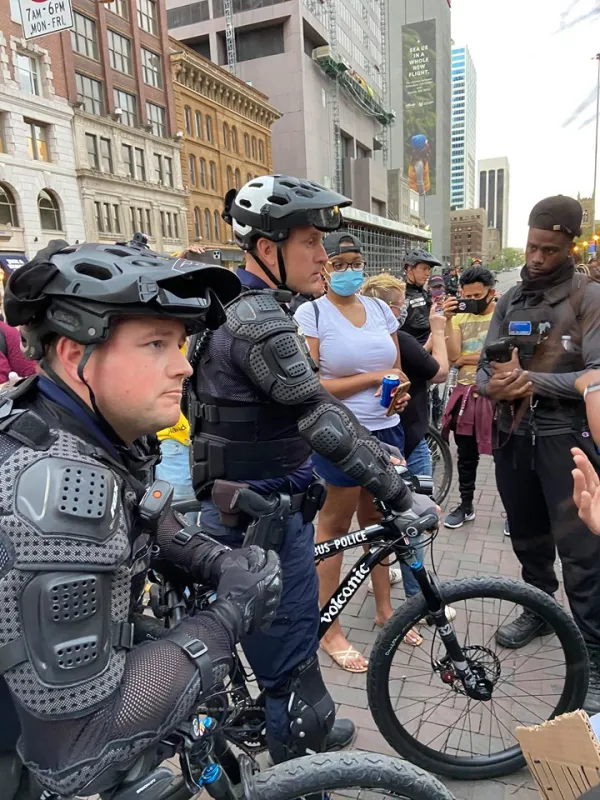
As protests recently erupted in response to the killing of George Floyd, we saw something that truly epitomized the American experience. Police in cities around the country responded to protests against police brutality with (surprise!) police brutality. Yes, in a time when everything seems like an Onion headline, seeing police respond to the protests with such profound force became a window into what’s been normal for American minorities for decades. Our country’s criminal justice system is steeped in systemic racism, where bigoted policies are codified and enforced with a well-funded, militarized apparatus. The only bright side is that now it’s finally being exposed for what it is.
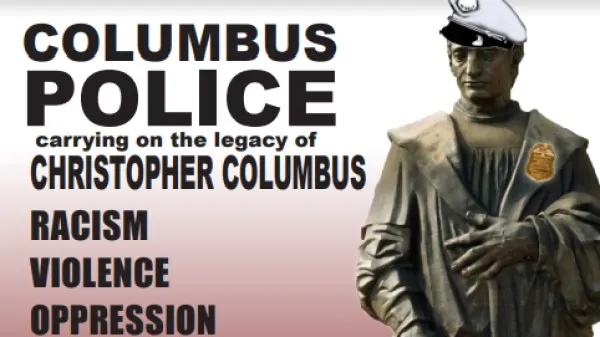
If the whole state of Vermont, the cities of San Francisco, Los Angeles, Phoenix, Denver, Seattle, Minneapolis, Albuquerque, Davenport, Iowa, and even Oberlin, Ohio can change the name of Columbus Day to Indigenous Peoples Day – could Columbus, Ohio be far behind? Sadly, yes.
Following the Ameriflora controversy in 1992 – the international flower festival at Franklin Park celebrating 500 years since Christopher Columbus invaded North America – Native Americans descended on Columbus City Council playing drums and chanting. Council members refused to change the name of Columbus Day, but as an immediate concession to the victims of genocide initiated by Columbus and to make the Native Americans go away, agreed that a week starting on Columbus Day would be designated Indigenous People’s Week. But we never heard anything about that again.
There were some victories: our city hasn’t held a Columbus Day parade since the 90s, the Santa Maria is thankfully gone, and activists successfully prevented a Christopher Columbus statue made by a Russian sculptor, six feet taller than the Statue of Liberty, from being erected downtown.
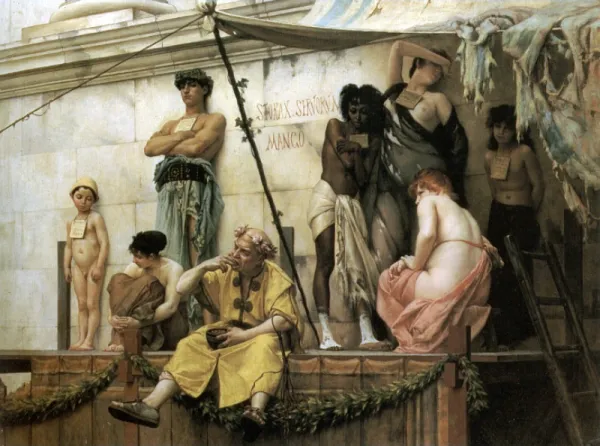
Grassroots outrage and nationwide protests after Minneapolis cops murdered George Floyd have pushed much of U.S. corporate media into focusing on deadly police mistreatment of black people. The coverage is far from comprehensive on the subject of racism in the “criminal justice” system -- we’re still hearing very little about the routine violations of basic rights in courtrooms and behind bars -- yet there’s no doubt that a breakthrough has occurred. The last two weeks have opened up a lot more media space for illuminating racial cruelty.
But what about economic cruelty?
Media outlets routinely detour around reasons why African Americans and other people of color are so disproportionately poor -- and, as a result of poverty, are dying much younger than white people. The media ruts bypass confronting how the wealthy gain more wealth and large corporations reap more profits at the expense of poor and middle-income people.
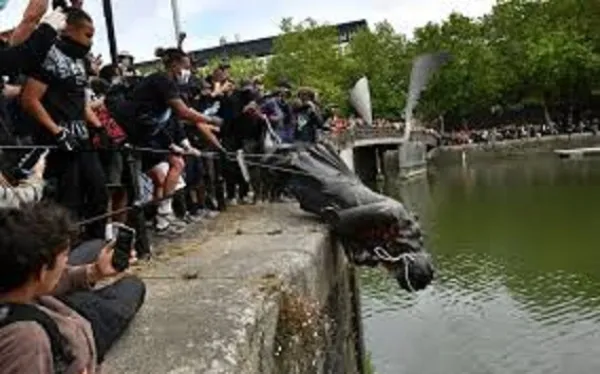
“This was not an attack on history. This is history. It is one of those rare historic moments whose arrival means things can never go back to how they were.”
And the toppled statue of a 17th century slave trader, now at the bottom of Bristol Harbour, is suddenly more relevant than ever, as the cry for compassionate social order – sparked by the murder of George Floyd – begins to engulf the whole planet. Perhaps . . . oh, let us hope . . . we are at the point of real change, a shift in the collective consciousness that holds our social systems together.
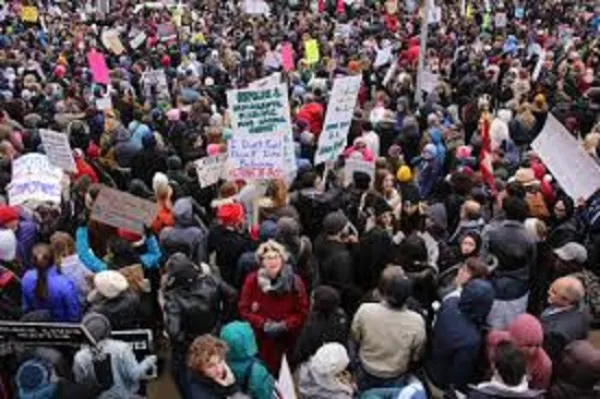
With groups of young people taking over downtown Columbus, the George Floyd protests are unique in how decentralized their organization has been and how social media was used to coordinate thousands to converge on downtown.
Many groups have shared the mic and they have similar goals to completely restructure the concept of policing.
But this decentralized movement – a fundamental strategy for today’s protesters – has led some local protesters to separate themselves from others so to promote what some believe are “softened” demands to city government and Columbus police.
At warp speed many protesters soon felt they were being led by people they have never met, who are spreading a message many protesters don’t agree with.
How did the Columbus protests become co-opted by group(s) who don’t share the same vision and goals as the majority of protesters? And just exactly who are some of these group(s) who seemingly materialized out of clouds of tear gas?
In written Chinese, the word “crisis” is represented by two characters. One of these, taken alone, means “danger”. The other, by itself, means “opportunity”. A crisis nearly always leads to great change. There is a danger that this will be a change for the worse. But there also is the opportunity to change society for the better - to reform and improve it. Both paths are present in a crisis like our present one. We must strive with all our strength to make society take the right path.
Our present crisis
In the midst of the COVID-19 pandemic, which is in itself a crisis, many American cities have erupted in massive protests over the senseless killing by police of yet another black man - George Floyd. The country is deeply divided. Throughout the world there have been anti-racist protests, partly in sympathy with the US protesters, and partly because racism exists in many countries.
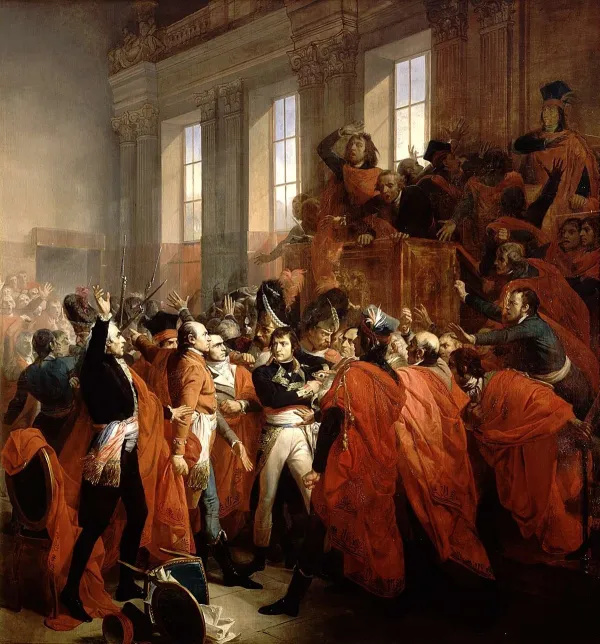
The global elite is conducting a coup that is designed to destroy all of the key elements of human society. It is doing this by destroying the essence of what it means to be human, by destroying the nature of existing human relationships, and by destroying the political, economic and social institutions of nation states.
Intentionally or otherwise, the elite coup is also fast-tracking four paths to human extinction.
If this coup succeeds, the human individual will have been reduced to a digitized identity who lives in a ‘techno tyranny’ serving the global elite or Homo Sapiens will be extinct. There is no third option unless we can defeat the coup and stop key structures and processes being put into place.
Do we have long? According to some scholars, as explained below, Homo Sapiens is already ‘functionally extinct’. If this is the case, only a monumental global effort can give us even a remote chance of surviving.
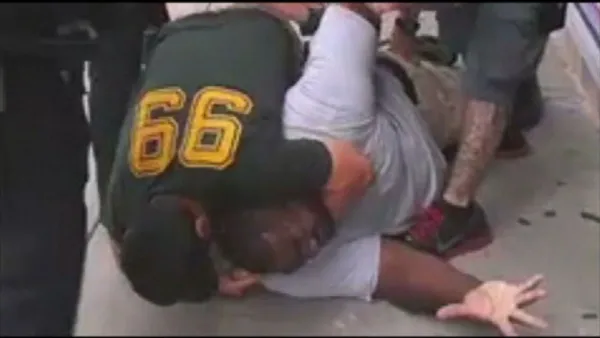
The killing of black man George Floyd by white Minneapolis police officer Derek Chauvin has produced the highest level of national unrest seen in the United States since the 1960s. Tens of thousands of protesters are demonstrating against racism and perceived police brutality. As it also comes at a time of coronavirus pandemic and record unemployment, it has the potential to change the U.S. in fundamental ways. The core issue is that many on the left, as well as some on the right, see America’s police as something like an “occupying force,” increasingly self-serving enemies of the people rather than careful protectors of the taxpayers’ lives and property.
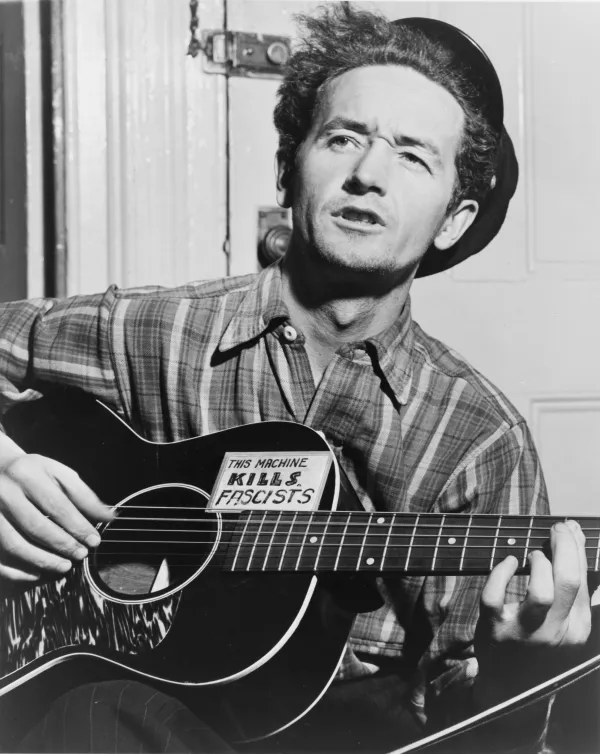
"Behind the ostensible government sits enthroned an invisible government owing no allegiance and acknowledging no responsibility to the people. To destroy this invisible government, to befoul the unholy alliance between corrupt business and corrupt politics is the first task of the statesmanship of the day."-- Theodore Roosevelt, April 19, 1906
“It’s ridiculous to talk about freedom in a society dominated by huge corporations. What kind of freedom is there inside a corporation? They’re totalitarian institutions - you take orders from above and maybe give them to people below you. There’s about as much freedom as under Stalinism.” --Noam Chomsky
A new analysis from the Ohio Immigrant Alliance shows that during the COVID-19 pandemic, the Morrow County Correctional Facility failed to follow its own Infectious Disease Control Program (IDCP), as well as the National Detention Standards (NDS) required in its contract with Immigration and Customs Enforcement (ICE). Because of this, the Morrow County Correctional Facility is now the first county jail in Ohio, and the first ICE detention center in the United States, to be 100% COVID-positive.