
Opinion
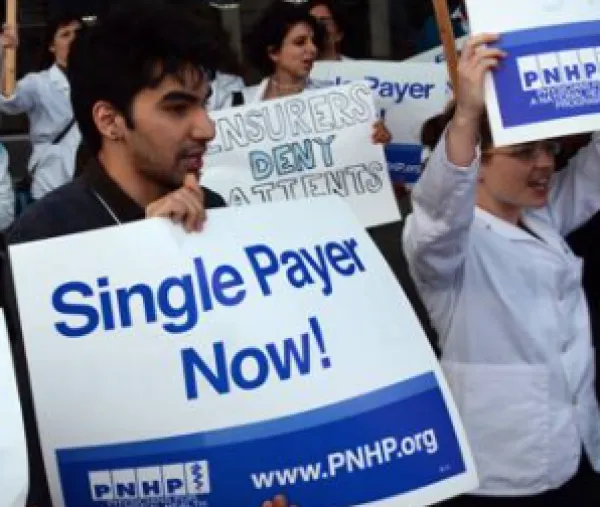
In the USA, hospitals are closings, health care workers are being laid off, substandard working conditions for nurses exist, lack of protective equipment, insurance companies’ massive profits without paying for hospital costs, millions uninsured and unwilling to have COVID-19 tests because of the cost. All these conditions are a result of hospital and staffing decisions are made on financial basis. Since elective surgeries were cancelled or postponed, hospitals have lost their primary funding source.
It is no wonder COVID-19 death rates are increasing, and are out of control.
Here are some numbers and facts:
* Eighty hospitals in the USA have closed this year.
* 80,000 nurses and health care workers were laid off or furloughed.
* 58,025 of the 138,707 private practice doctor’s offices closed from 3/2020 to 6/2020.
That is a reduction of almost 42%.
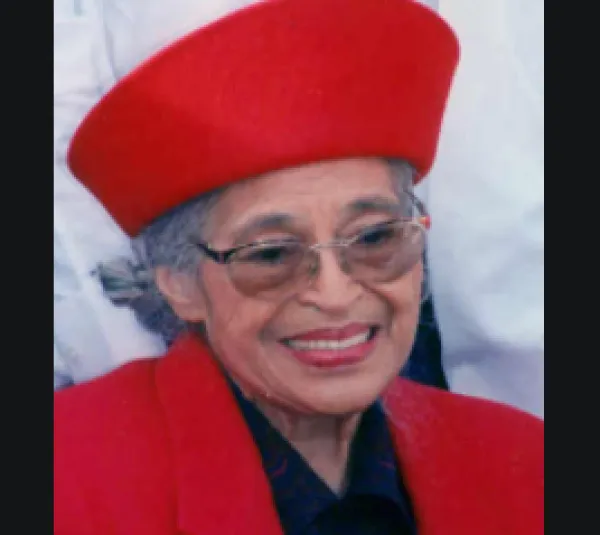
I appreciate Congresswoman Joyce Beatty's annual commemoration of Rosa Parks on December 1. At the time of Ms. Parks' death on October 24, 2005, Ohio's 3rd District Congresswoman Beatty acted to declare December 1, Rosa Parks Day in honor of her actions on that day in 1955, sparking the Montgomery Bus Boycott.
We must continue to speak up for the voiceless in Black History and current events. Claudette Colvin is another one of those unsung (s)heroes. At age fifteen Ms. Colvin preceded Parks' action by nine months when she refused to give up her seat on the bus on her way home from Montgomery, Alabama High School. When asked why she did not give up her seat, she referred to Black History and answered: "it felt as though Harriet Tubman's hands were pushing me down on one shoulder and Sojourner Truth's hands were pushing me down on the other shoulder. https://www.southernliving.com/culture/claudette-colvin

The story of 2020 is that not much happened and everything happened.
It started as a presidential election year with much at stake and is ending with an existential threat to democracy apparently repelled.
Just when the Democratic Party primaries were heating up in mid-March, many of us got cooled down with what amounted to two months confined to quarters.
The Land of the Free became the Home of the Quarantined.
About the time many of us were running short of toilet paper, Joe Biden was running up the score in the primaries and emerging as the Democratic Party nominee to take on the Mad King, the COVID-19 denier-in-chief and carnival barker telling us a slug of Clorox would kill the virus.
Those of us with a modicum of common sense turned to medical doctors, scientists and public health leaders and followed their advice, often brought to us by trustworthy news reporters and commentators.
We started wearing masks way before Halloween this year and we began washing our hands way more often than before meals.
To many, social distancing was a new concept. Not to me. I first experienced it at junior high school dances.

By now, most people are aware of the US obesity statistics. In 2016, almost 70 percent of US adults were obese of overweight says the CDC. That means normal sized people are in the minority. (Some are even considered "anorexics.")

From ancient religious figures to poets to today’s self-improvement gurus, observing the New Year has conveyed a forward-thinking sense of optimism and possibility. Of wiping the proverbial slate clean and starting over, leaving the past behind in order to go on to bigger, better things. Buddha extolled followers to believe, “No matter how hard the past, you can always begin again.” T.S. Eliot noted: “For last year’s words belong to last year’s language. And next year’s words await another voice.” While motivational speaker Tony Robbins proclaims: “New Year = A New Life! Decide today who you will become, what you will give how you will live.”
Dr. Seuss wrote about “How the Grinch stole Christmas” – but is President Trump the Orange Ogre who will steal New Year’s? Since coming into office Trump has been the ultimate annual buzzkill, casting a pall and ominous shadow over January’s glad tidings, as if he’s determined to ruin the sensibility of hopefulness that usually accompanies the passage of the old year into the new.

“There’s class warfare alright. But it’s my class, the rich class, that’s making war, and we’re winning.” – Warren Buffett
“The central point that emerges from our research is that economic elites and organized groups representing business interests have substantial independent impacts on U.S. government policy, while mass-based interest groups and average citizens have little or no independent influence.” - Martin Gilens and Benjamin Page - Testing Theories of American Politics: Elites, Interest Groups, and Average Citizens
“Total liberty for the wolves is death to the lambs.” – Isaiah Berlin
Revisiting the Great American Retro-Reset 1970-2020 –
Democracy Down the Tubes?
As the prospect of the World Economic Forum’s proposed ‘Great Reset’ as an international response to the current Covid crisis looms, it’s worth reminding ourselves that other ‘resets’ - i.e., radical transformative shifts in the socio-political-economic structure - have happened before, historically and recently, at both the international and national levels.
As the New Year approaches you can almost feel the global sense of relief felt by leaving 2020 behind. It was truly a difficult year that met us head-on with unique challenges, tested our resiliency, and stole both people and traditions we hold dear. The theme of uncertainty was woven into every aspect of our lives - school, work, healthcare, activism - few things were spared.
It is difficult to predict what lies ahead - but one thing is certain - we have the creativity, vision, and power to create the just, fair, and sustainable communities we desire. This truth should illuminate the path we choose in 2021.
In response to crippling economic uncertainty - mutual aid groups cropped up across the nation and continue to offer support and locate resources.
Legal protections offered to racial injustice wore thin and the veil of community police protection was torn away by Black Lives Matter protests paired with a demand to defund (and ultimately restructure) a system that perpetuates racism, poverty, and violence.
Don’t let the door hit you in the ass. That’s the way most of us feel about 2020.
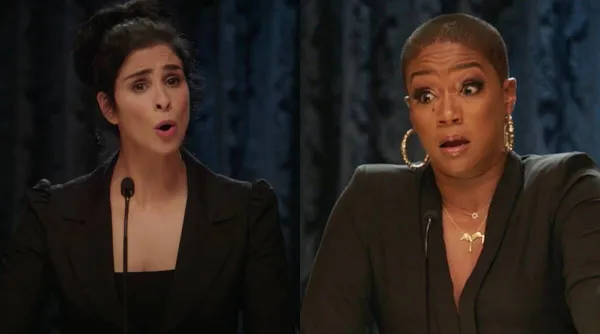
In Yearly Departed, the hated year gets a funnier and slightly more thoughtful sendoff. A group of female comics deliver a series of “eulogies” that reveal feelings ranging from relief to regret—relief that 2020 is over and regret over some of the things it and its pandemic stole from us.
Tiffany Haddish leads off with one of the funnier bits, a mournful farewell to casual sex. “Casual sex was my rock,” she says tearfully, remembering how much comfort it brought her when, for example, she had a bad night at the comedy club. She adds that the loss is even harder when she goes out in public and realizes how sexy men are when they’re wearing masks and standing 6 feet away.
Natasha Rothwell invokes the Black Lives Matter movement when she satirically (and probably prematurely) mourns the loss of TV cop shows. Given all that’s happened, she says, it’s just too hard to believe dramas in which the police actually solve crimes and treat everybody equally.
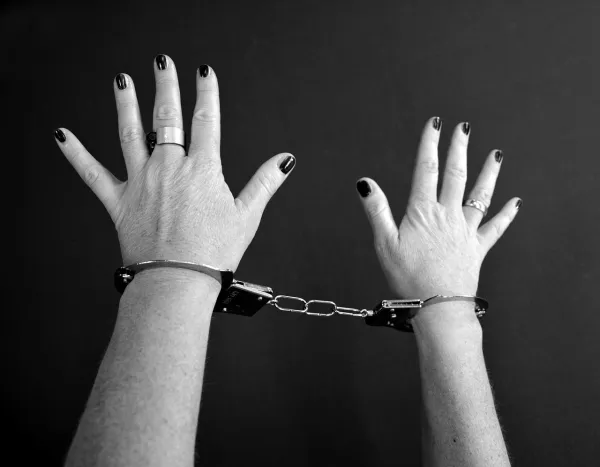
Vermont’s only prison for women is, by all accounts, a ghastly place. The facility was never intended to be a prison. The facility was never intended to house women. Built as a men’s detention center in the 1970s, the facility is inadequate to provide what any reasonable person would consider adequate health and safety conditions for as many as 160 incarcerated women.
The Vermont women’s prison, formally known as the Chittenden Regional Correctional Facility (CRCF) in South Burlington, came into being in August 2011 as a political effort to reduce the state budget pushed by then Governor Peter Shumlin, a military-industrial Democrat who also supported basing the nuclear-capable F-35 in Winooski. Shumlin pushed both projects with grand promises of benefits that have yet to be fulfilled.

The resistance to the apparent election of Joe Biden as President of the United States is continuing to play out. Current President Donald Trump is continuing to fight against the presumed results of the November national election with his final card appearing to be a vote in Congress when it reconvenes on January 6th to throw out the results due to fraud in certain key states. Many have noted how the registration and electoral processes in the United States, varying as they do from state to state, were and are vulnerable to fraud. That, plus some eyewitness testimony and technical analysis, suggests that possibly systematic fraud did take place but it is far from clear whether it was decisive. This is particularly true of the vote by mail option, which was promoted by leading Democrats and which empowered literally millions of new voters with only limited attempts made to validate whether citizens or even real people were voting.