
Opinion
1
The weather in Philadelphia can be bad. If it rained more, they could call it the Schuylkill Bay instead of the Schuylkill River. Though the nearby Delaware River is bigger, the Schuylkill has its own history, some yet to be made.
A distance from the river, centered at the bubble end of a lane, Anton Evers’ home stood as a kind of beacon. The builders of the houses on the lane used red bricks for every house except Evers’. His are white.
Evers opened the second-floor front door and peered out into the morning rain, which produced a pleasant cadence on the lids of the cans on the sidewalk below. Rain made it a bad day to collect trash, or deliver the newspaper.
But Toby Wallace didn’t mind, because today was his last day throwing the paper as he walked. A boy turns 16 only once, and that was today. Tonight, he’d pilot a car that used to belong to someone else. After tonight, it belonged to him.
He was most excited to show his new wheels to his two friends, his only friends, B-drop and Tick. But the trio rarely saw each other, because B-drop and Tick were in a gang known as the Front Street Boyz.

Undaunted, the pandemic can’t stop the Pan African Film Festival and in that immortal show biz tradition, the show must go on! Albeit virtually, as this year in order to stay cinematically safe, America’s largest and best yearly Black-themed filmfest since 1992 is moving online and starting later than usual, kicking off on the last day of Black History Month. 2021’s 29th annual Pan African Virtual Film + Arts Festival is taking place from Feb. 28 – March 14.
I am a big fan of the work by actor/director/writer Nate Parker, which powerfully expresses Black consciousness and militancy in movies such as: 2012’s Red Tails about the heroic Tuskegee Airmen who were antifascists before Antifa; 2007’s fact-based The Great Debaters, which proved Blacks can excel academically and Denzel played a suspected Communist; and 2016’s The Birth of a Nation, which Parker directed, co-wrote and starred in as Nat Turner, who led America’s bloodiest uprising against slavery (see: The Last Shall Be First in "The Birth of a Nation" - Progressive.org).
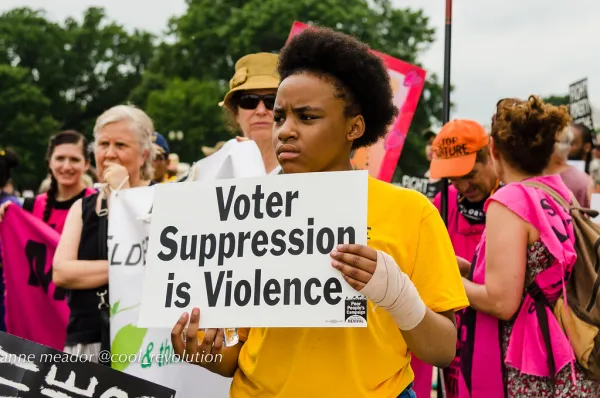
“The United States of America has open wounds.”
Ever since its founding, the United States has been attempting to build a society around those wounds, on the belief that hyped-up language — “all men are created equal,” and so forth — can paper over deep wrongs. If you put the ideal in writing, you can ignore its absence in real life.
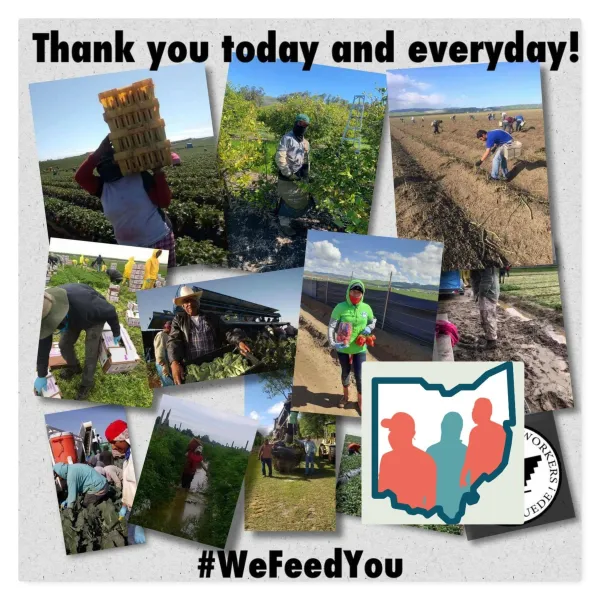
COVID-19 has diminished the average U.S. lifespan by an entire year, but Black Americans and those of Latin American origin have lost 2.7 and 1.9 years respectively, according to the CDC. Overrepresented in essential occupations, these workers are still not being prioritized for vaccines even though one in 10 are being exposed to the virus at least once per week, while many white Americans who work at home have already been vaccinated.
In February, Essential Ohio sent a letter to Gov. DeWine and Ohio Health Department Director Stephanie McCloud urging them to prioritize essential workers for COVID-19 vaccines. Essential Ohio is still awaiting an answer from DeWine and McCloud.
There are over 15,000 undocumented workers in the food supply chain in Ohio, for example, and that’s only a portion of our undocumented essential workforce in this state. Ohio’s agricultural industry, which relies on a historically marginalized and vulnerable migrant workforce, has continued to employ and bring in thousands of workers to ensure that Ohioans and the rest of the country have food on their plates during this dangerous and challenging time.
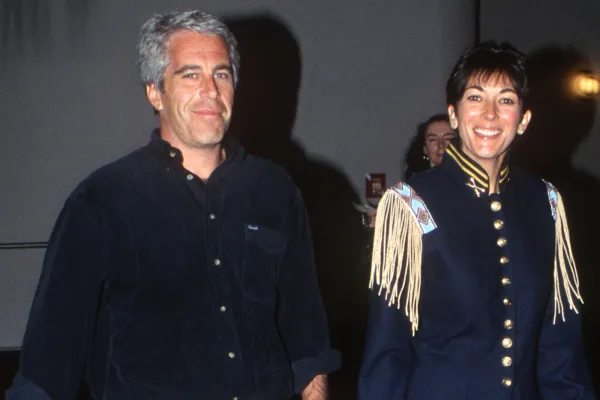
It is now going on a year and a half since “financier” and pedophile Jeffrey Epstein died, allegedly by hanging himself in a New York City prison. Since that time it has surfaced that there were a number of “administrative” errors in the jail, meaning that Epstein was not being observed or on suicide watch even though he had reportedly attempted to kill himself previously. The suspicion that Epstein was working for Israel’s external intelligence agency Mossad or for its military intelligence counterpart also seemed confirmed through both Israeli and American sources.

Undaunted, the pandemic can’t stop the Pan African Film Festival and in that immortal show biz tradition, the show must go on! Albeit virtually, as this year in order to stay cinematically safe, America’s largest and best annual Black-themed filmfest since 1992 is moving online and starting later than usual, kicking off on the last day of Black History Month. 2021’s 29th annual Pan African Virtual Film + Arts Festival is taking place from Feb. 28 – March 14.
Like love, film is a many splendored thing for PAFF. This unique filmfest screens productions in various formats and mediums – including features, documentaries, studio blockbusters like Coming 2 America, indies and animation – and also in a variety of lengths. The common thread PAFF weaves is a tapestry of works regarding the Black experience, from Timbuktu to Papua New Guinea to the Caribbean to L.A. and beyond, by and about Blacks. And often PAFF presents films that Angeleno moviegoers may never otherwise have an opportunity to view (and gives them a foothold in a world movie capital). So thanks to PAFF, I was able to behold two worthy short films.
CELESTE’S DREAM: GOOD GRIEF!

The protester civil-rights suit concluded this week as two Columbus police commanding officers took the virtual stand in the City’s defense. One commander insinuated the Division’s use of force against protesters was warranted because lines were crossed when objects were hurled at them or when the Palace Theatre was damaged.
“Most cops understand when individuals are going from peaceful to violent,” testified Commander Duane Mabry to a City defense attorney. “And so we have to move that to a large scale with a crowd. So throwing stuff at us is kind of a clue they are a violent crowd. Destroying property is a clue they are a violent crowd. Fighting amongst each other is a clue they are violent crowd.”
After the Ferguson protests in 2014, Cmdr. Mabry was tasked to give the entire Division a “refresher course” on crowd control and to continue to do so annually.

“For Washington, it seems that whatever the problem is, the answer is bombing.”
So wrote Stephen Zunes, in the wake of Joe Biden’s first act of murder as president . . . excuse me, his first act of defensive military action: bombing a border post in Syria last week, killing 22 of our enemies. This action, of course, will quickly be forgotten. “The United States has bombed Syria more than 20,000 times over the past eight years,” Zunes notes, adding:

Addressing the United Nations Human Rights Council on February 24, US Secretary of State Antony Blinken had an opportunity to demonstrate the Biden administration’s break with the past by establishing a new level of human rights leadership. He failed. Judging by Blinken’s speech, the US is determined to break no new ground in a world awash in continuing human rights atrocities.
To be sure, Blinken began with the high-minded rhetoric expected on such occasions:
In 2020’s Promising Young Woman, Carey Mulligan plays a woman whose life has been forever changed by a sexual assault—a sexual assault that happened not to her, but to a friend who was too incapacitated to give consent.
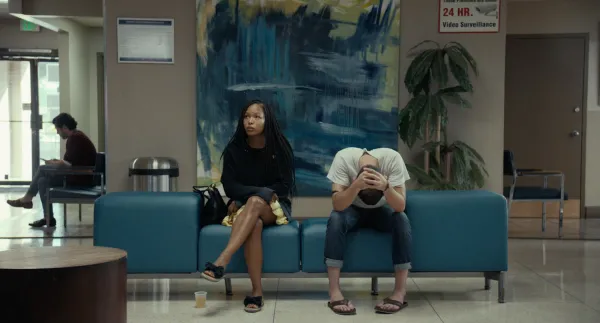
In Test Pattern, Brittany S. Hall plays a woman who actually falls victim to such an assault after she’s been numbed by alcohol and drugs. But compared to its predecessor, the new film takes a less direct and more complicated approach to the subject. Rather than focus solely on sexual politics, writer-director Shatara Michelle Ford branches out into other areas, including the unmapped intersection of race and romance.
It’s a sign of the film’s multifaceted concerns that the assault doesn’t happen until well into its brief running time. Until then, Ford concentrates on developing the relationship between Renesha (Hall), a young Black executive living in Austin, and Evan (Will Brill), a White tattoo artist.