Opinion
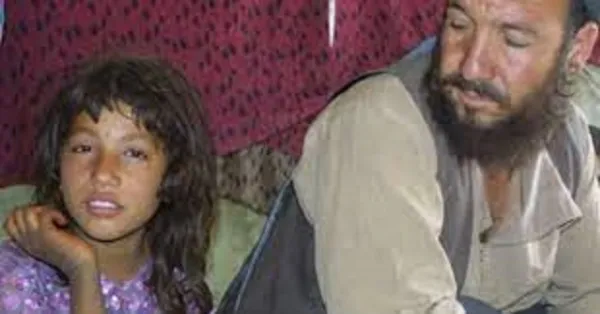
When I met a seven-year-old girl named Guljumma at a refugee camp in Kabul a dozen years ago, she told me that bombs fell early one morning while she slept at home in southern Afghanistan’s Helmand Valley. With a soft, matter-of-fact voice, Guljumma described what happened. Some people in her family died. She lost an arm.
Troops on the ground didn’t kill Guljumma’s relatives and leave her to live with only one arm. The U.S. air war did.
There’s no good reason to assume the air war in Afghanistan will be over when -- according to President Biden’s announcement on Wednesday -- all U.S. forces will be withdrawn from that country.
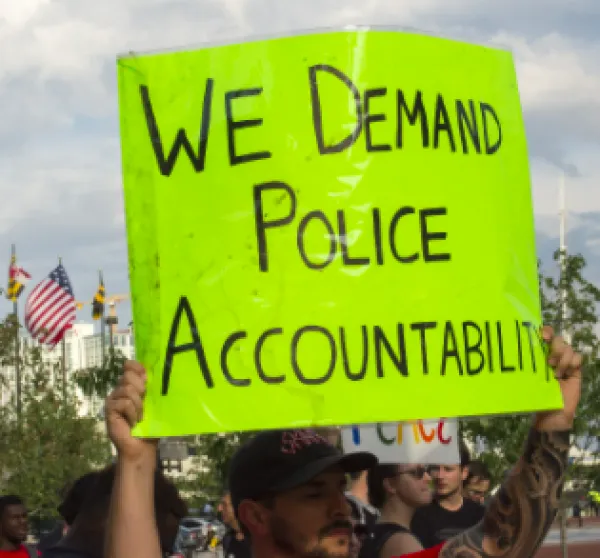
Since 1871 the Civil Rights Act has held state and local officials—including police officers—legally liable for damages if their actions violate a citizen’s Constitutional rights.
That’s until the Supreme Court punched a huge hole in the law, making it now nearly impossible to hold police officers accountable—even for acts that clearly violate the rights of citizens. Such actions multiplied massively under the war on drugs.
As part of that “war,” state and local police departments, in the 1970s, ramped-up their acquisition of military equipment and adoption of military-style tactics, including the use of Special Weapons and Tactics Teams (SWAT) and no-knock drug raids.
The timing is curious. Just as police departments began gearing up their war-like tactics, the Supreme Court created a legal defense—known as qualified immunity—in time to protect police officers engaging in such tactics.
By the mid-1990s, according to criminologist Peter Kraska, nearly 90% of U.S. cities with a population over 50,000 had a SWAT team—almost double of what existed in the mid-1980s.

8
Jack Barns punched his cell phone, texting. The intercom on his desk buzzed. He tossed the cell phone onto the desk with a clatter and punched the in-desk phone.
“Yes, Louise?”
“Ms. Sachs and her party are here for their 10 o’clock.”
“Tell ‘em to swing it in,” and they did.
“Come in, let’s sit over here. The view is better. Anyone care for a drink?” Barns said.
“Tequila and a Coke, in separate glasses, for Mr. Smith Wilson,” Louise said without prompting.
“Ms. Sachs will take Zia-Zong tea and Mr. Papilov will have black coffee, correct?” she said, walking to the bar on the side of the room.
Their drinks dispensed, Louise left the room and closed the door behind her. Papilov pulled a flask from within his coat pocket and spiked his coffee.
“Well?” Barns said. “Where do we stand?”
“You said not to poke around PPD yet. Did you make your call?” Sachs asked.
“No, because there’s something else,” Barns said.

The popular narrative of plucky little Israel prevailing over hordes of bloodthirsty Arabs has captured the Western imagination even though it is manifestly false in almost every detail. But Israel’s greatest accomplishment might well be something else, it’s ability to make things disappear. It plausibly all began in June 1967 when Israel attacked the USS Liberty, a lightly armed but well identified US naval vessel cruising in international waters under a large American flag. Fighter bombers and torpedo boats sought to sink the ship, destroying the lifeboats so no one would escape. In the engagement, 34 American military personnel were killed and a further 171 wounded, before a heroic defense by the crew managed to save the vessel. President Lyndon Johnson, who said he would rather see the ship sink than embarrass his friend Israel, started a cover-up which has lasted to this day. There has been no legitimate court of inquiry into the attack and when the ship’s captain received a Medal of Honor for his heroism, it was awarded secretly in the Washington Navy Yard rather than openly at the White House.
“Get out of the car! Get out of the car NOW!!”
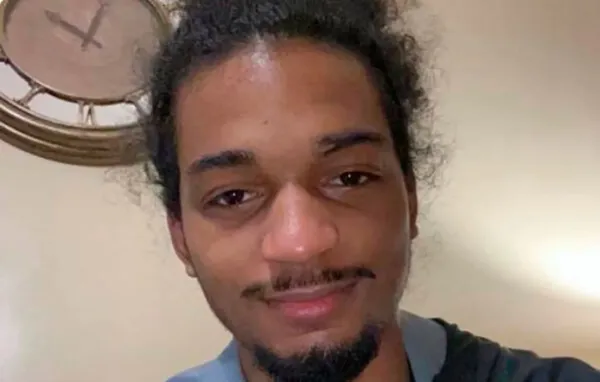
The officer — the mad man with a badge — probably shouts those words 50 times at the driver, Second Lt. Caron Nazario, at a gas station in Windsor, Va., all the while holding a gun a foot from his face. Nazario, who is black and Latino, had just been pulled over for not having a rear license plate (he did have one but, you know, we all make mistakes) and . . . fasten your seatbelts! . . . driving with tinted windows. Of course the cops had their guns drawn.
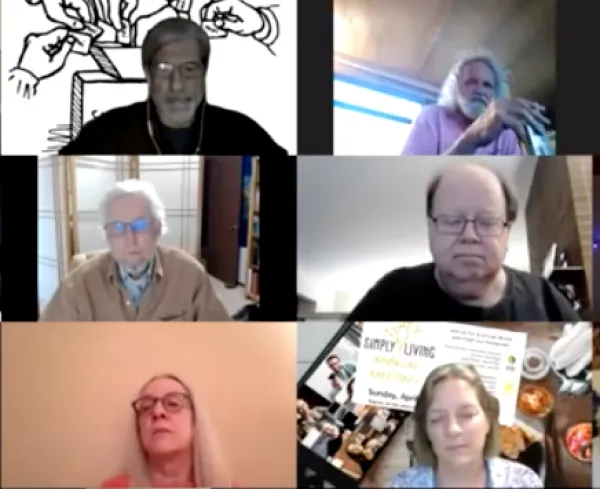
The April Free Press Second Saturday Cyber-Salon was about “Earth Politics” facilitated by long-time Free Press Board member and activist Mark Stansbery.
Mark reminded the group that Earth Day is in April and went over the history of the celebration and how indigenous people have been the target of environmental racism and how they’ve fought back, particularly recently over the DAPL pipeline. He quoted Chief Seattle: “The Earth does not belong to us, we belong to the Earth.” Lynn Stan shared a link for the city’s urban forest plan and Cathy Cowan Becker recommended the site Murdered & Missing Indigenous Women and the Stop the Money Pipeline website.

Several years ago, Columbus resident David Bynum had a chance to meet his birth mother, but he ultimately lost his nerve. It wasn’t until his late 50s that the retired correctional officer finally gave in to his curiosity and set out to learn who he really was.
The results can be seen in the homey documentary he wrote, narrated and directed, From a Place of Love—My Adoption Journey. Though Bynum had waited too long to meet either of his birth parents, his search did lead to the discovery of family members he’d never known he had. He also learned something about the societal forces that likely drove his mother to give him up for adoption.
Linda Evans was a White woman who’d fallen in love with Chuck Comer, a Black athlete who played college football (though not at Ohio State, as Bynum had long thought). When Linda became pregnant, the prevailing prejudice against interracial romance apparently led her to give up her young son.

When we recently spoke with Cynthia Brown she was driving around town on a sunny Saturday morning visiting “every activist event” in Central Ohio that day.
Brown is seeking roughly 1,000 signatures needed by the Ohio Attorney General to approve ballot language for a 2022 initiative she is proposing to end qualified immunity for Columbus and Ohio law enforcement. If the language is accepted, Brown knows she will need a small army to gather the 400,000-plus signatures to get approval for a statewide vote.
Disheartening was how some state level and City of Columbus office holders talked tough during the summer of 2020 about ending qualified immunity, which they could do themselves, but as usual so found their promises were empty.
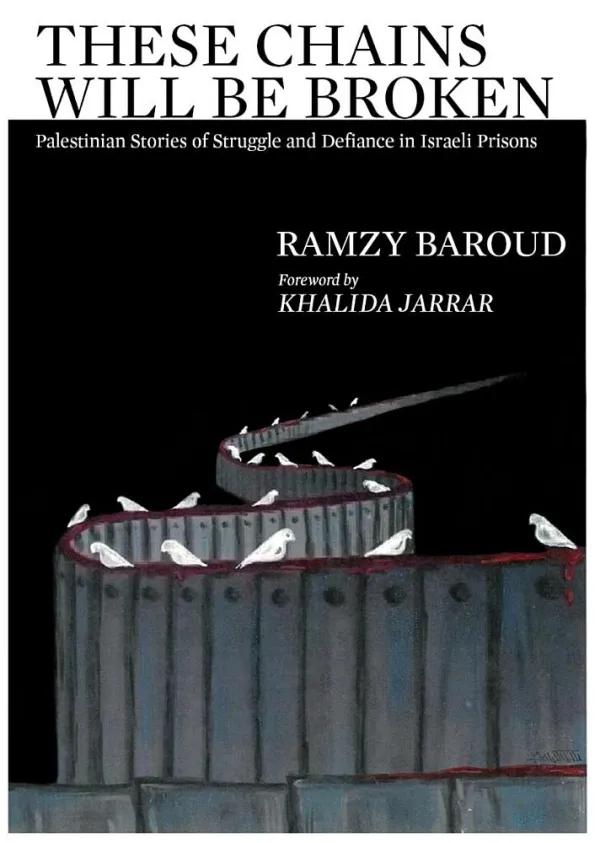
If imprisoned Palestinian leader, Marwan Barghouti, becomes the President of the Palestinian Authority (PA), the status quo will change substantially. For Israel, as well as for the current PA President, Mahmoud Abbas, such a scenario is more dangerous than another strong Hamas showing in the upcoming Palestinian parliamentary elections.
The long-delayed elections, now scheduled for May 22 and July 31 respectively, will not only represent a watershed moment for the fractured Palestinian body politic, but also for the Fatah Movement which has dominated the PA since its inception in 1994. The once revolutionary Movement has become a shell of its former self under the leadership of Abbas, whose only claim to legitimacy was a poorly contested election in January 2005, following the death of former Fatah leader and PA President, Yasser Arafat.