Opinion
Many of us know the pain of paying steep tolls, especially when a turnpike is taken over by a private company.
Now imagine you live in one of our hemisphere’s most impoverished countries. Do that and you’ll get a glimpse into how unfair trade deals help make life unlivable in many countries — and force countless people to seek a living in countries like the United States.
When a private company suddenly put up toll booths in the middle of a taxpayer-funded highway, local residents in El Progreso, Honduras were furious.
They knew the new fees would also hike the price of food, bus fares, and their daily commutes — and that making it in their country, where roughly half of the population lives below the poverty line, was going to become unbearable.

For Gaza We Rise. Sunday, October 6, 2024, 3:00 PM. Commenorating 1 year of resistance. Sponsored by OSU Students for Justice in Palestine.
Watch video here.
Video by Scot Lacy, Milopictures
This is the first event in a series of a Week of Rage.
As a full year of genocide approaches, the zionist regime’s ruthless aggression has only intensified. With over 300,000 martyrs in Gaza and apocalyptic scenes unfolding in Lebanon, Syria, and Yemen, the occupation’s fascism continues to be laid bare before our eyes.
It has never been more vital to show a unified front against the ongoing genocide in Palestine. We urge everyone to join us at every event to honor all our martyrs and continue the fight for liberation. As long as Palestine, Lebanon, and other countries stand steadfast in their resistance against the zionist entity, so do we. We will remain fearlessly until liberation is achieved.
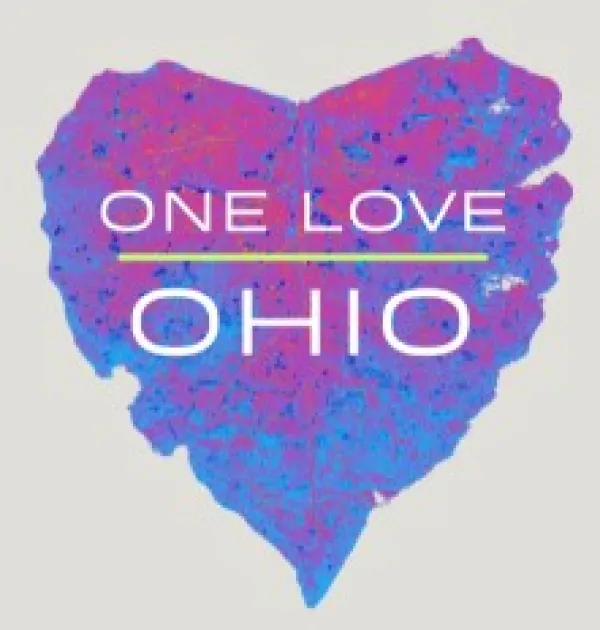
There are two famous songs called “Ohio.” One is from the 1953 musical “Wonderful Town,” sung by NYC transplants Eileen and Ruth. From the “gossipy neighbors and everyone yapping who’s going with who” and “dating those drips that I’ve known since I’m four,” the women remember exactly “why, oh, why, oh, why, oh” they “ever left Ohio.” But they also recall what is good about the place.
The second famous song is by Crosby, Stills, Nash, & Young. Every time we hear its ominous, bluesy intro, people of a certain age get a chill in their bones. “Tin soldiers and Nixon coming / We’re finally on our own / This summer I hear the drumming / Four dead in Ohio.” This “Ohio” is about the Kent State Massacre on May 4, 1970, when four college students, protesting the Vietnam War, were killed by the Ohio National Guard.
It’s little wonder why the fun, yet innocuous, “Hang on Sloopy” by The McCoys remains our state’s official rock song.


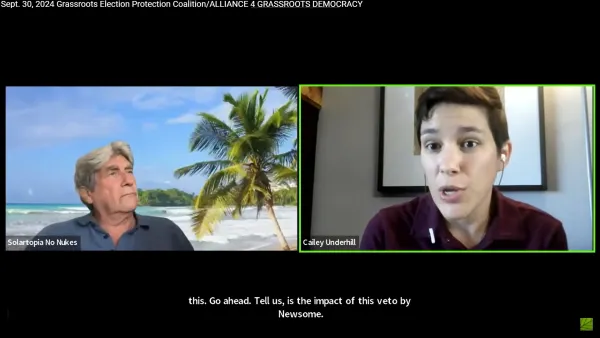
Our GREEP zoom #192 begins with a furious renunciation of the death penalty in the wake of the unconscionable official murder of MARCELLUS WILLIAMS.
Mr. Williams’s extensive appeals have been rejected by a “pro life” Supreme Court despite the appeal by the family of the alleged victim and many others.
At a minimum more than 200 innocent victims have been put to death by “pro life hypocrites” despite overwhelming evidence of their innocence.
STEVE ROSENFELD then gives us a detailed exploration of the mechanics of the upcoming fall election, focusing on the contrast of the legal landscape alongside the administrative landscape.
Steve is joined by RAY MCCLENDON of Georgia and JOHN BRAKEY of Arizona in arousing massive popular turnout at the voting booth.
JOHN STEINER introduces DAVID NEVINS of The Fulcrum.us and The Overtime Project, also aimed at voter enthusiasm.
MIKE HERSH urges us to view VIGILANTES INC. by Greg Palast with its warning against voter suppression in 2024.
The phenomenon of “mental health disorder” has become so influential that, according to recent studies, every second person has—or will have—at least one diagnosed mental illness in their lifetime. This figure presents an existential and statistical impossibility: when more than half of the population is inflicted with psychological abnormality, the norm has become abnormal.
How can it be that the majority of us are sick? To answer this troubling question, some point to modern realities—social media, social isolation, environmental doom—while urging for societal change.
Others see an aggravating factor. Maybe, they argue, there isn’t a true rise in mental illness, but that one distinctive force is inflating what is a relatively stable emotional landscape—no worse or better than before.
In such a scenario, the seeming escalation of mental illness is largely due to an increase in the identification of psychiatric disorder, and not a rise in genuine illness. That is, people are not suffering more, but rather, normal suffering is, more and more, being called “sickness.”