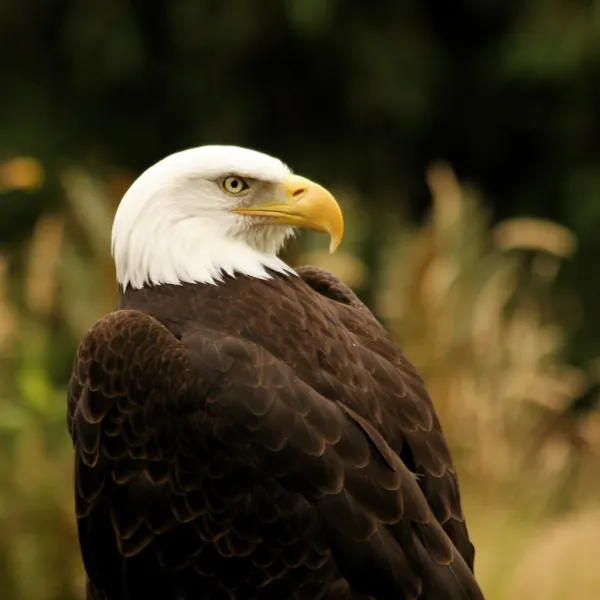
Something good happened in Washington last week, suggesting that the year might actually end on a high note without Joe Biden starting World War 3 and opening up all the country’s prisons for the on-the-street rehabilitation of the inmates where they will undoubtedly learn new skills. The good thing was the signing by Biden of a bill, perhaps with a little bit of help from his friends to make sure he spelled his name correctly, to make the Bald Eagle the official bird of the United States of America. The Eagle has been around the American Republic virtually since its foundation, appearing on the Great Seal and on various documents and even on currency, but it has never been officially dubbed the national bird.
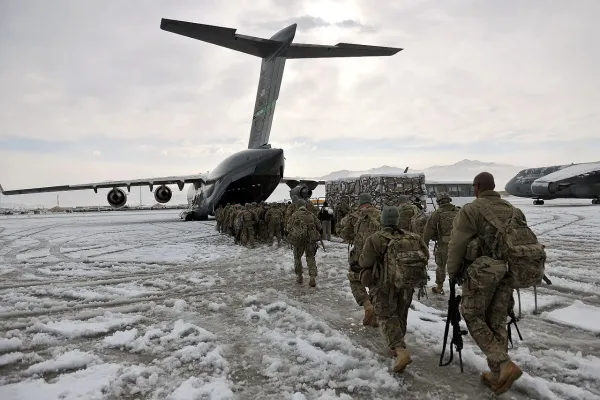
This week, the New York Times reported that the U.S. government made war in Afghanistan while helping to “recruit, train and pay for lawless bands of militias that pillaged homes and laid waste to entire communities.” Those militias “tortured civilians, kidnapped for ransom, massacred dozens in vendetta killings and razed entire villages, sowing more than a decade of hatred toward the Afghan government and its American allies.”
Written by a former Kabul bureau chief for the Times, the article appeared under a headline saying that “U.S.-backed militias” in Afghanistan were “worse than the Taliban.”
Now they tell us.
The new reporting made me think of a chapter in my book War Made Invisible titled “Now It Can Be Told.” Here’s an excerpt:
* * * * *
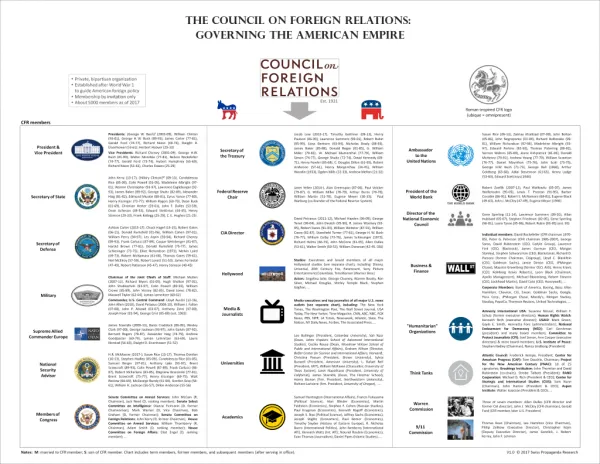
The American Empire: What is in a name?
When I write about American foreign policy, I never refer to America or to the United States, but rather always use the term “American Empire” or simply “the Empire”. I suspect many readers find this to be uncomfortable or even offensive terminology. Once upon a time, when writing I would use the term “we” or “our” when referring to the behavior of “our” government towards other nations. But as “our” government became more obnoxious and aggressive, I could no longer take any ownership to that behavior. I could no longer use pronouns indicating possession as I reject this behavior. For example, the coup in Ukraine in 2014 could not be described as something that “we” did, when “we” indicates that the American people and myself were supportive of that action.
Dig, ponder, dig some more.
A year ago I wrote a column about some of the early moments of my growing up – not just memories but profound moments of awareness; flickers, you might say, of becoming who I am. I was 77 at the time. Now I’m . . . oh yeah, 78. Can you believe it? Another year is almost over. Holiday season shimmers, the smell of pine is in the air. It’s Christmas: a perfect time to open, once again, the stocking known as memory.
In last year’s column, I wrote about three childhood moments that created me as a person – or informed me that I had changed, moved forward in the process of becoming. These were moments of self-awareness. Gosh! I had no idea such a thing existed, but there I was at age six, playing “Red Rover” on my elementary-school playground with a bunch of other kids and I realized: I was part of something bigger than myself; I wasn’t alone. Run and play, laugh and love! It’s called “community” (I later learned).
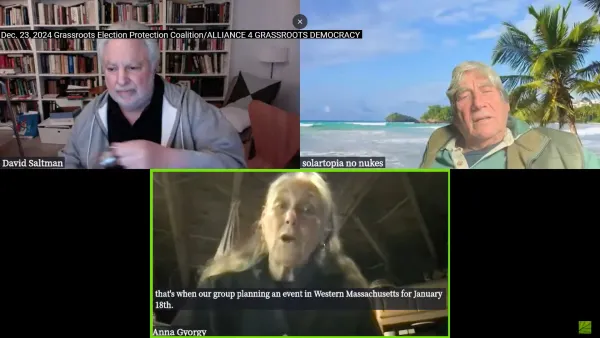
TATANKA BRICCA opens with a report on LEONARD PELTIER and the desperate need to get him out of prison alive.
Petition: https://www.amnestyusa.org/campaigns/free-leonard-peltier
MYLA RESON follows up with a key point of information on how, hopefully, to do that.
Our Poet Laureate MIMI GERMAN gives our GREEP Zoom #204 a perfect opening poem.
MIKE HERSH hearkens back to the formation of the US republic with a warning on the horrors of fascism.
DAVID SALTMAN explains Section 3 of the 14th Amendment, banning insurrectionists from holding public office.
From western Massachusetts, ANNA GYORGY reminds us (https://www.traprock.org) that Inauguration Day, 2025, (Jan. 18 event Poster at bottom) will be Martin Luther King Day.
BARBARA HARRISON adds a plea to fight for democracy
MELISSA HALL asks about calling the White House to help free Leonard.
CATHERINE STEARNS lets us in on resistance organizations in Oregon….including the Civil Liberties Defense Center.
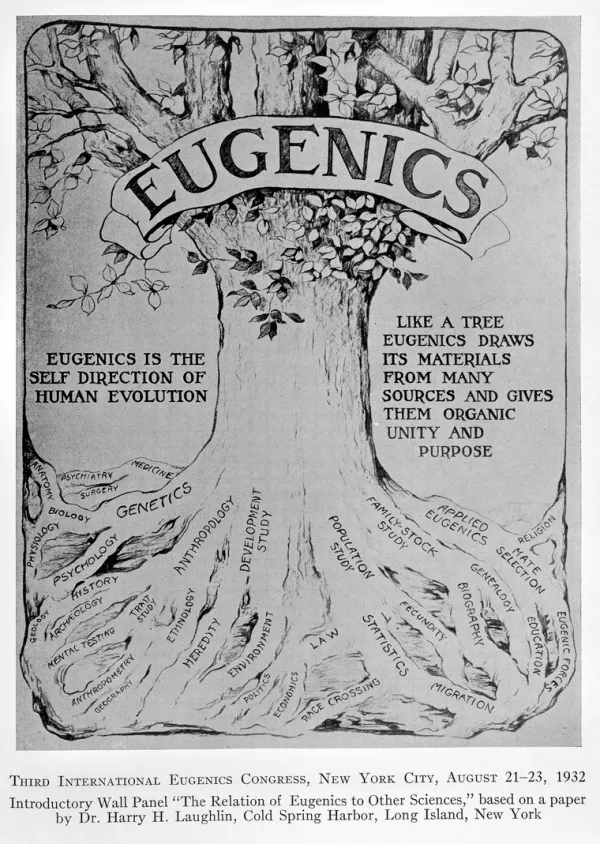
The Cold Spring Harbor Laboratory, a private research laboratory, is located on Long
Island, New York, where I live. Its outrageous history is detailed in a forthcoming book, “Long
Island and the Legacy of Eugenics: Station of Intolerance.”
The book, by Mark A. Torres, an attorney as well as an author, will be released by The
History Press on January 21st. Torres also wrote the 2021 book “Long Island Migrant Labor
Camps: Dust for Blood,” an examination of the plight of migrant farmworkers on Long Island,
published, too, by The History Press.
Torres is general counsel of Teamsters Local 810, a union that covers Long Island, and as
an attorney has long specialized in labor and employment law in federal and state courts. He is
also a professor at Hofstra University.
As an author, he excels at in-depth research. Earlier this year the Association of Public
Historians of New York awarded Torres its Joseph F. Meany Award (named for former New York
State Historian Joseph F. Meany, Jr.) for his book on migrant farmworker camps on Long Island.
Most Long Island residents know little about the Cold Spring Harbor Laboratory