As the Trump presidency digs its claws into the country – winner take all! – I look on in terrified amazement as he begins arrogantly instituting what can only be called his plan to devolve America back to the good old days: back to the era of Jim Crow certainty and whatever that might mean.
We’re white, we’re Christian and we’re the best! Just ask Pete Hegseth.
This is the “Gulf of America”! It’s not Trump’s smugly renamed Gulf of Mexico; it’s the hole in the country’s collective consciousness, which Mr. President is hellbent on expanding. His plan is to make America safe for what it used to be and allow our old, beloved prejudices to return. Deport the illegals! Kill wokeness! Kill understanding and awareness!
All of which leaves a few glaring questions hovering over the daily news: How the hell did this guy win a majority of votes? Is he really aligned with the nation’s primary beliefs? And if he isn’t . . . uh, what happened last November? Was the election rigged? Was it stolen? And if so, how? Do we live in a publicly proclaimed – yet fake – democracy?


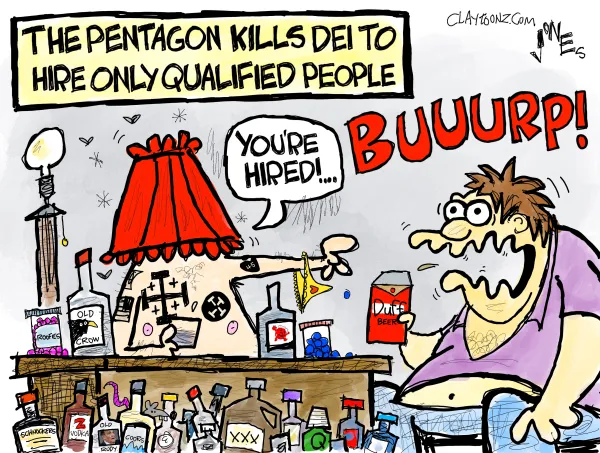
On January 20 and 21, 2025, President Trump by executive order instructed all Federal Government offices to disregard all DEI initiatives; has ordered agencies to combat private-sector DEI mandates, policies, and programs; has eliminated federal funding for a more just and equitable country.
But the need for attention to Diversity, Equity, and Inclusion initiatives remains as important as ever in all aspects of life in the USA, especially in health care.
Diversity – the practice and quality of including people from a range of social and ethnic backgrounds. We know that no two people are alike. Our genetic make-up, geographical origins, cultural background, religious practice, economic and educational opportunities, age, and ability make us all different in wonderful ways. This is a reality regardless of Presidential Proclamation and something to be appreciated as we build shared communities, foster creativity, and strive to create an environment where basic human rights are met.
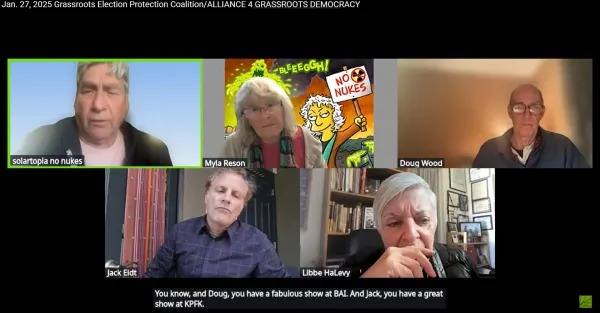
Our GREEP Zoom #209 begins with “Time” by our Poet Laureate MIMI GERMAN.
We hear the latest about Leonard Peltier from TATANKA BRICCA and LYDIA PONCE in concert with the Indigenous community supporting him: “I would like to be out of prison, but I am a free man.”
BARBARA WRIGHT reminds us to thank The Creator for the fact that Leonard is out of prison & with his people.
LIndsay Graham, Lisa Murkowsky & Susan Collins are summoned for praise by DANIELA GIOSEFFI.
Will Trump’s GOP wear itself out with a Rope-a-Dope of illegal acts, asks MYLA RESON.
We hear from MIMI S about the need to recognize what should have been with Bernie Sanders.
From Columbus, Ohio we hear from SANDY BOLZENIUS about the kinds of election fraud that turned the Buckeye State to Bush in 2004. .
From co-convenor MIKE HERSH we bemoan the Democrats’ lack of a backbone—except when disenfranchising people of color.
“How long can they keep this up?” wonders MELISSA HALL.
Massive disenfranchisement demands a class action case against the Democrats for failing to protect the vote, says DAVID SALTMAN.

The dominant self-conception of the Jewish story is innocence, repeated persecutions, and then redemption by creation of the Jewish nationalist State of Israel.
This narrative is critically examined in Peter Beinart's new book, Being Jewish After the Destruction of Gaza: A Reckoning.
Beinart's book says the maudlin story we Jews tell ourselves of our virtue and heroic endurance inoculates Jews from seeing Israel's agency in creating the resistance it faces:
“We must now tell a new story to answer the horror that a Jewish country has perpetrated… We are not history’s permanent virtuous victims.”
Beinart, former editor of The New Republic, is now an editor-at-large of Jewish Currents, and a New York Times contributor.
He has been in a 20-year progression of seeing, more and more sharply, the “Jewish and democratic” state of Israel as anti-democratic and incompatible with Jewish tradition.
He writes that support for a Jewish state has become “idolatry,” permitting endless killing, torture and oppression of Palestinians:
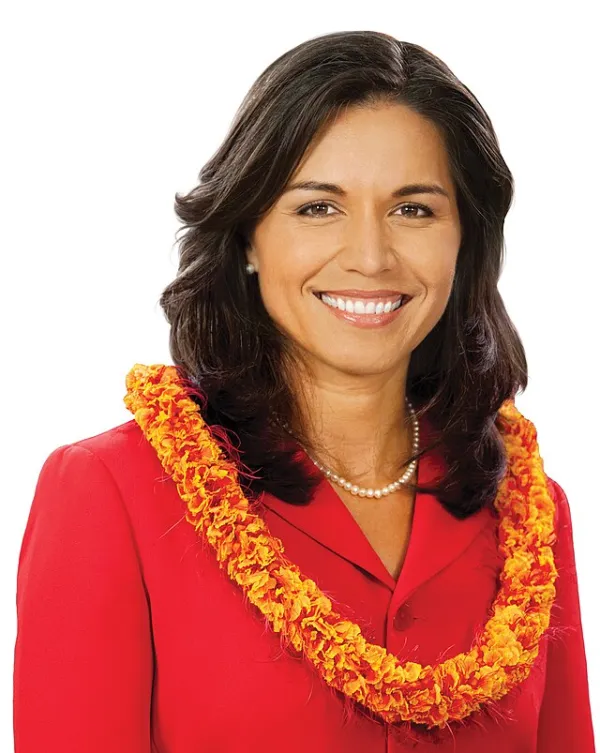
During my sixteen years in Congress, I fought consistently for peace, accountability, and the protection of our nation’s core values. I understand the gravity of the position of Director of National Intelligence (DNI)—a role essential to the security of our nation, where the person in charge must evaluate and interpret military intelligence that informs decisions affecting the lives of millions. That is why I fully support Congresswoman Tulsi Gabbard’s nomination as Director of National Intelligence (DNI) in the Trump administration.
This critical position requires a person who understands the urgency of truth and the severe consequences of sending America’s sons and daughters into battle based on false or manipulated intelligence.
The Kucinich Report is a reader-supported publication. To receive new posts and support my work, consider becoming a free or paid subscriber.

The problem with political analysis is that it often lacks historical perspective and is mostly limited to recent events.
The current analysis of the Israeli war on Gaza falls victim to this narrow thinking. The ceasefire agreement, signed between Palestinian groups and Israel under Egyptian, Qatari, and US mediation in Doha on January 15, is one example.
Some analysts, including many from the region, insist on framing the outcome of the war as a direct result of Israel's political dynamics. They argue that Israel's political crisis is the main reason the country failed to achieve its declared and undeclared war objectives—namely, gaining total "security control" over Gaza and ethnically cleansing its population.
However, this analysis assumes that the decision to go to war or not is entirely in Israel's hands. It continues to elevate Israel's role as the only entity capable of shaping political outcomes in the region, even when those outcomes do not favor Israel.